A practical framework for live football betting decisions
Live betting means placing a wager after a football match has started, when the score, remaining time and on-field events can affect the available odds. A practical framework helps you decide whether to place a bet, revise your plan or avoid the market. Use the score and clock alongside tactical evidence and a fixed budget—not excitement or pressure. This guide is for adults of legal gambling age; betting should be treated as entertainment, not income.
Set your conditions before the match begins
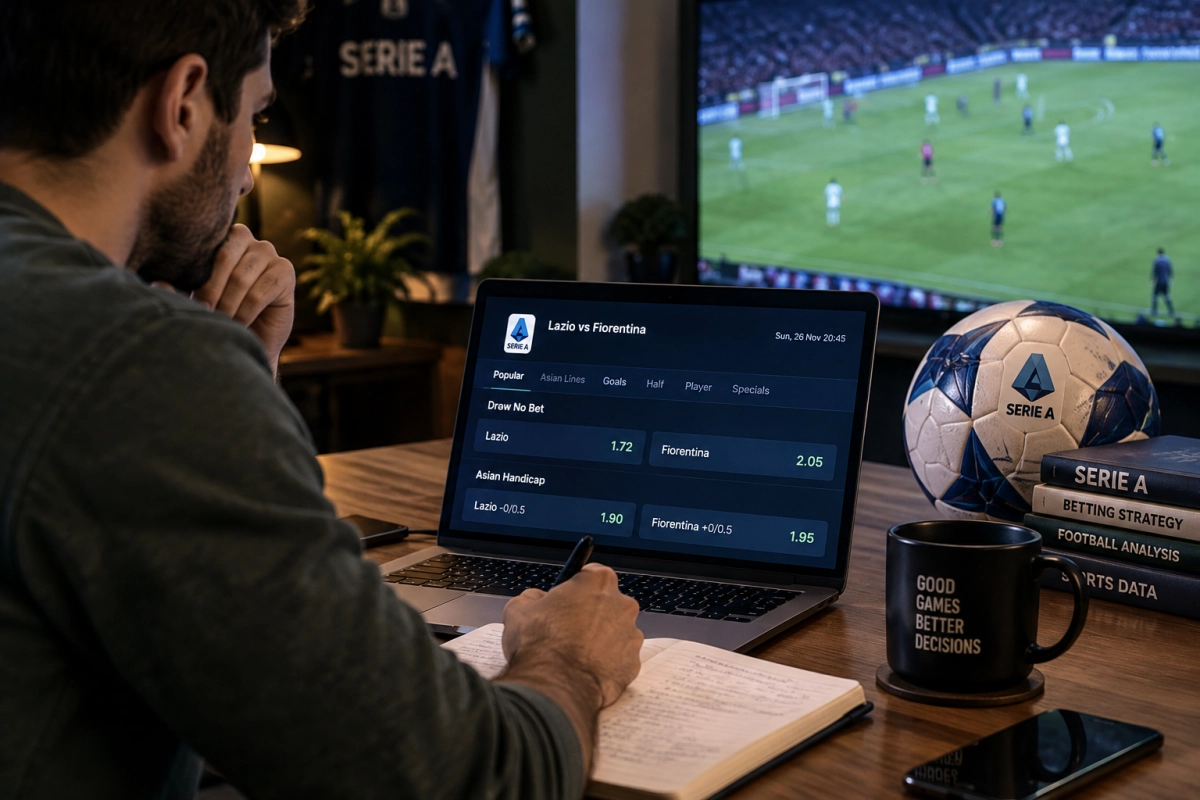
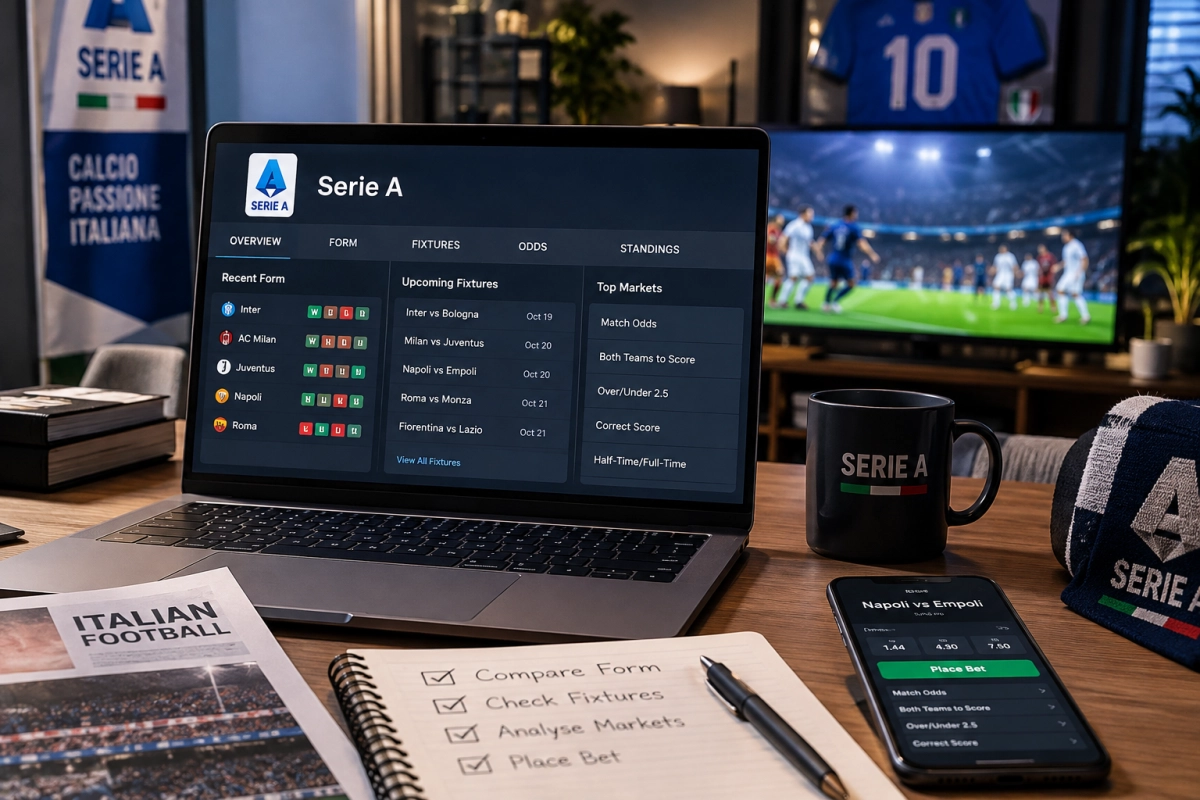
Before kickoff, write down what would need to happen for you to consider a live bet. This keeps a fast-moving match from turning into a series of impulsive decisions. Your plan can include a market, a price you would consider, a maximum stake and a clear reason to walk away.
For example, you might decide to reassess an over-goals market only if both teams are creating chances and the available odds still fit your view. That is a condition to review, not a prediction that more goals will follow. Odds can change quickly, and the same match may offer different prices across operators.
- Choose eligible matches: Consider whether you know the teams, their usual styles and the competition context.
- Set a session budget: Decide in advance how much you can afford to lose, and do not add funds to recover a loss.
- Pick a maximum stake: Keep each potential wager within your budget rather than increasing it because the match feels important.
- Define an exit rule: Decide when you will stop watching or betting, including if the match becomes difficult to assess.
Check reliable, current team information before the match where possible. Injuries, suspensions, expected line-ups, recent form, home and away records, fixture congestion and motivation can all shape your expectations. Treat head-to-head records as background, not proof of what will happen today.
Read the score and clock together
A scoreline does not explain the whole match. A team leading by one goal may be controlling possession and limiting chances, or it may be under sustained pressure. The clock matters too: teams often change their approach late in a match, but added time, substitutions and stoppages make the remaining duration uncertain.
Before considering a market, ask whether the match evidence supports your original view. Look at the quality and frequency of chances, shots on target, dangerous transitions and whether either team has changed shape. A high number of shots alone can be misleading if most are blocked or taken from poor positions. If available, expected goals (xG) estimate the quality of chances; they are useful context, not a guarantee of future goals.
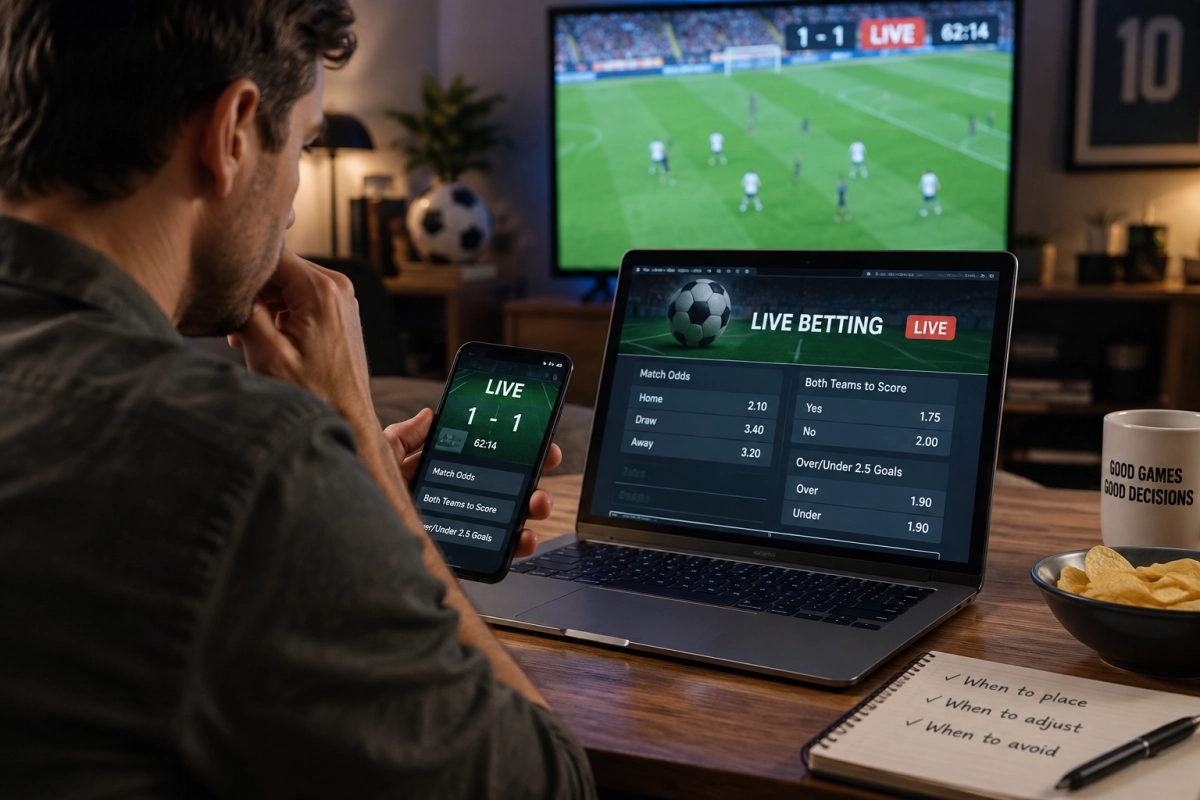
- Consider placing a bet only when the live evidence fits your pre-match conditions, the odds are acceptable to you and the stake is within budget.
- Adjust your plan when a meaningful change—such as a tactical switch or red card—alters the match, but reassess the market and price rather than reacting automatically.
- Avoid the bet when the game is unclear, the price no longer suits your assessment, or you feel tempted to chase losses.
Next, assess how tactical changes, cards and market movement can strengthen—or weaken—the case for a live decision.
Interpret tactical changes and cards in context
A formation change matters only if it changes how the match is being played. A team switching to two strikers may create more pressure, but it may also leave space for counterattacks. Watch what happens after the change: are players reaching dangerous areas, getting the ball into the box or forcing mistakes? A substitution’s name or reputation alone is not evidence that the balance has shifted.
Red cards can alter the match substantially, but their effect depends on the score, the time remaining and each side’s response. A team with ten players might defend deep and protect a lead, while the opponent may struggle to create clear chances against a compact defence. If a side is trailing, it may take more risks, leaving gaps behind. Consider whether those patterns are visible before reassessing a market; do not assume a goal is likely simply because one team has a numerical advantage.
Also account for uncertainty. A player may be receiving treatment, a substitution may be delayed, or a referee’s decision may be under review. If you cannot tell what is happening, wait for the situation to settle or avoid betting until you can assess it clearly.
Treat odds movement as information, not instruction
Live prices respond to events and can change quickly. A goal, sending-off or promising attack may move the odds, but a shorter price does not make a wager more suitable. Compare the current price with the conditions you set before kickoff: if it no longer meets your threshold, let the opportunity pass rather than accepting a price just to stay involved.
Check that you understand the market and its terms before placing anything. For example, a goals market may be settled differently from a next-goal market, and the score at the time of placement can affect what a selection means. Read the displayed rules, including how the operator handles abandoned matches or other unusual events. If the market is suspended or the screen appears out of date, do not try to anticipate the price when it reopens.
Fast movement can reflect new information, but it can also make an assessment harder. You do not need to explain every fluctuation or follow it with a wager. If you cannot identify why the price still fits your view, step back.
Pause before placing or changing a stake
Use a brief check before confirming a bet: what is the score, how much time is likely left, what tactical evidence supports the decision, and does the price still meet your conditions? Then check the stake against your remaining session budget. If any answer is unclear, the practical choice is to wait or avoid the market—not to increase the stake to compensate for uncertainty.
Keep a record of bets and the reasons for them, including decisions to pass. This can help you distinguish a consistent process from decisions driven by a dramatic moment. Do not treat a loss as a reason to place another bet, or a win as proof that a risky decision was sound. If you reach your limit, stop for the session, even if the match continues.
Where available, use account limits, cooling-off tools or self-exclusion if betting is becoming difficult to control. These safeguards support the budget you set; they are not a reason to extend it.
Keep the decision in perspective
No live bet is required, and passing on a market is a sound decision when the evidence or price is unclear. Keep betting within the limits you set and treat the match as entertainment. If betting stops feeling manageable, step away and use available support or account safeguards.