
How to Analyse La Liga Fixtures Before Choosing a Betting Market
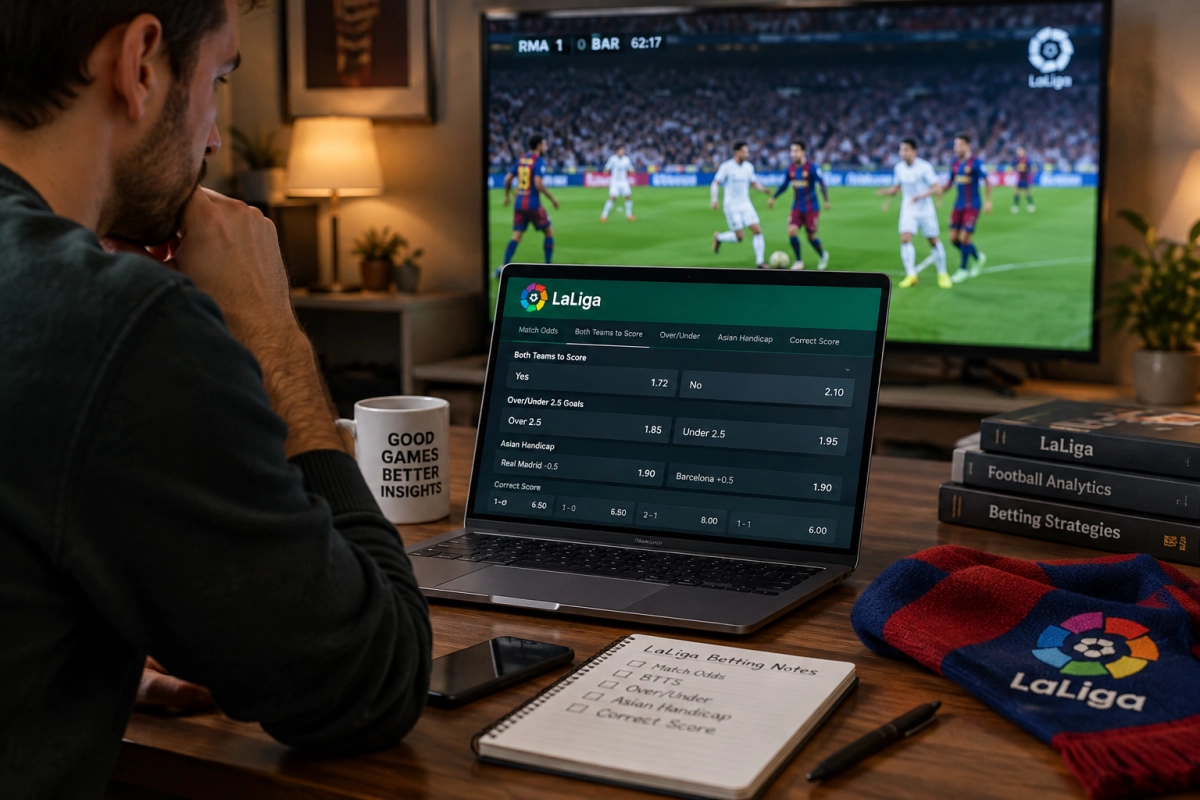
La Liga betting becomes more disciplined when a fixture is studied beyond the league table or a team’s last result. A practical analysis should compare home and away performance, scoring and conceding patterns, goal timing, team news and the demands of the schedule. This process does not guarantee a winning bet, but it can help bettors make better-informed decisions and compare markets more logically.
Before checking prices, the bettor should build a clear picture of how the two teams are likely to approach the match. Recent statistics should support that assessment rather than replace it, because small samples can be affected by red cards, difficult opponents or unusual finishing.
A Repeatable Checklist for La Liga Match Analysis
A consistent checklist helps prevent emotional decisions based only on reputation or head-to-head history. The following points provide a useful starting framework:
- Venue: Check whether the match is at home or away. Some teams perform confidently in their own stadium but collect considerably fewer points on the road.
- Recent form: Review the last five to eight matches, while considering the quality of the opponents and whether performances were better or worse than the results.
- Availability: Confirm injuries, suspensions and expected line-ups close to kickoff. The absence of a central defender, creative midfielder or main striker can alter the likely match pattern.
- Tactical approach: Consider whether either team presses high, protects a lead effectively, relies on counter-attacks or creates chances through wide areas.
- Schedule demands: European matches, extra travel, short rest periods and international breaks may affect energy levels and squad rotation.
- Motivation: European qualification, relegation pressure or a local rivalry may influence intensity, although motivation should not be treated as a measurable guarantee.
This checklist can be recorded in a simple notes table before any market is selected. It is also important to separate confirmed information from interpretation. A confirmed suspension is factual; an assumption that a replacement player will perform poorly is only an opinion.
Why Home and Away Records Matter
League-wide form can hide important venue differences. A team with three wins in its last five matches may have achieved all three victories at home, while its away performances may show defensive weaknesses or a lower chance-creation rate.
The bettor should compare several measures rather than points alone:
- Average points per home or away match
- Goals scored and conceded in each venue
- Clean-sheet frequency
- Matches in which the team scored first
- Shots, expected goals or other chance-creation indicators, where reliable data is available
For example, a strong home record may support consideration of the match-winner market, while an unreliable away defence could make both teams to score or home-team goals more relevant. However, venue statistics should use a reasonable sample. Four matches can suggest a pattern, but they are not enough to establish a permanent team characteristic.
Reading Scoring Patterns and Goal Timing
Over/under markets concern the total number of goals, while both teams to score requires each side to find the net. These markets should be assessed through each team’s attacking output, defensive record and game state rather than through league averages alone.
Goal timing can add another layer. If a team regularly concedes after half-time, fatigue, substitutions or tactical changes may be relevant. Recent La Liga data has generally shown more goals after the interval than before it, but a broad league trend should be weighted below team-specific evidence.
The next stage is to combine these patterns with fixture congestion, match context and available odds before deciding whether any market offers suitable potential value.
Accounting for Schedule Pressure and Squad Rotation
Fixture congestion can change the expected performance of a team even when its underlying quality remains the same. A club returning from a European away match may have less time to recover, particularly if the trip involved significant travel or a demanding opponent. The impact may appear late in the game through slower pressing, fewer forward runs or defensive concentration errors.
Check the number of days between matches, the location of the previous fixture and whether the next match is strategically important. A coach may rotate several players, but rotation is not automatically negative if the squad has suitable replacements. It is more useful to identify which roles are affected. Changes to the goalkeeper, centre-back pairing or holding midfielder may influence defensive stability, while the absence of a primary creator could reduce the team’s ability to turn possession into chances.
International breaks require separate caution. Players may return at different times, carry minor injuries or face long-distance travel. These factors are difficult to quantify, so they should usually adjust an existing view rather than become the sole reason for selecting a bet.
Using Fixture Context Without Overrating Motivation
The importance of a match can influence tactics and risk-taking. A team chasing European qualification may need a win, while one protecting a narrow advantage in the table could be satisfied with a slower, more controlled contest. Relegation pressure can produce urgency, but it can also create anxiety and rushed decision-making.
Consider how the likely objective may affect the match state. If both teams would accept a point, a low-tempo first half may be more plausible. If one side must win, it may commit more players forward, increasing both its attacking potential and its exposure to counter-attacks. Local derbies can also bring greater intensity, although emotional energy does not guarantee high-quality chances or an unusually high goal total.
Head-to-head records should be treated carefully. Older meetings may involve different managers, players and tactical systems, making them less relevant than current venue and performance data. Recent meetings can still provide useful context when the teams have maintained similar approaches, but they should not override present evidence.
Comparing Markets With the Available Price
Once the fixture has been assessed, compare markets that reflect the same underlying view. A strong home side facing an inefficient away attack might support a home win, home win to nil or an away-team under-goals selection. These options carry different levels of risk, so the price must be considered alongside the probability suggested by the analysis.
Do not choose a market simply because its odds are higher. A correct prediction can still represent poor value if the price is too short. Instead, estimate a realistic probability, convert it into an implied price and compare that estimate with the bookmaker’s odds. Allow for uncertainty caused by line-up news, small samples and unpredictable finishing. If no market offers a sufficiently attractive difference between estimated probability and price, passing on the fixture is a valid decision.
Making the Final Betting Decision
A sound La Liga betting process is ultimately about discipline rather than certainty. Statistical patterns can strengthen a view, but they cannot remove the uncertainty created by late team news, tactical changes or the natural variance of football. The best decision may sometimes be to wait for confirmed line-ups or avoid the fixture entirely.
When the evidence, match context and available price point in the same direction, a market may deserve consideration. When they conflict, restraint is usually more valuable than forcing a selection. Over time, applying the same method consistently and reviewing decisions objectively can help bettors judge whether their assumptions were realistic and whether the prices they accepted were justified.