How to Evaluate Live Football Matches Before Choosing In-Play Markets
Live betting starts with the match context
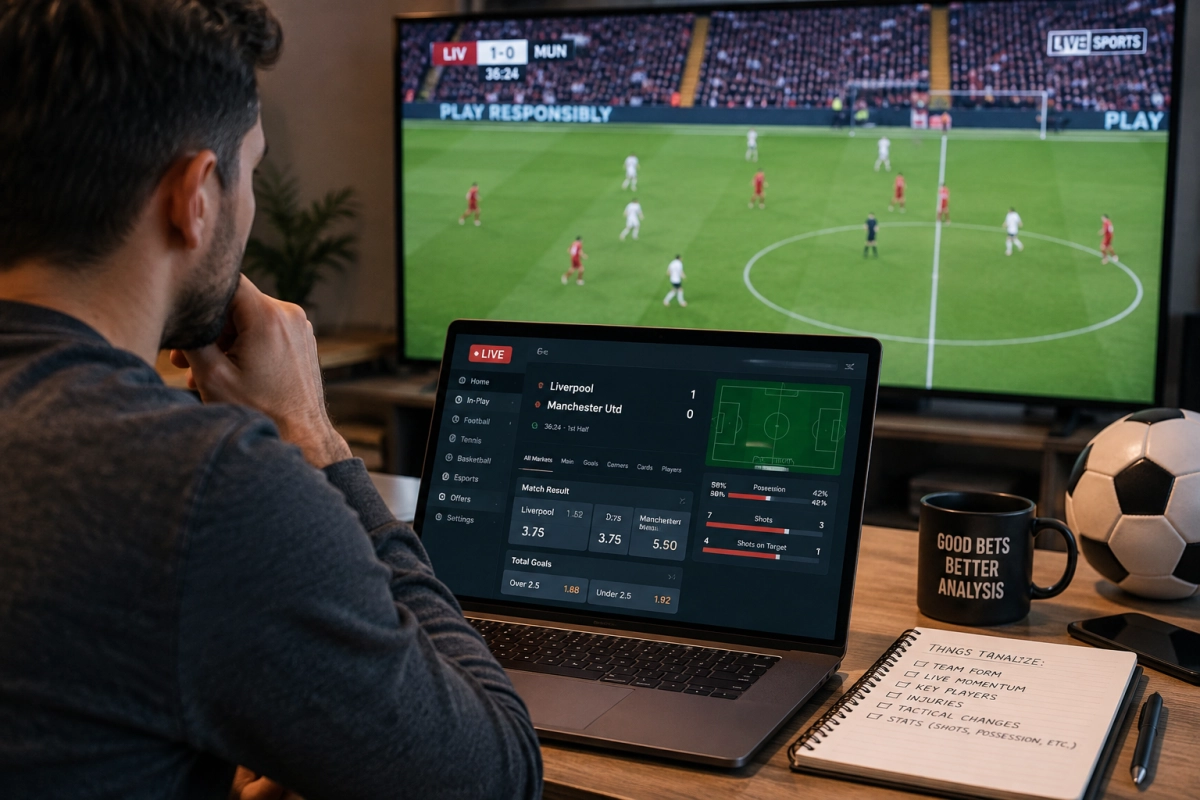
Live betting requires more than reacting to a goal or a short period of pressure. A useful evaluation combines the current score, time remaining, possession, shots, attacking territory, cards and tactical changes. These details can help a bettor understand whether the match is following the pre-match expectation or developing in a different direction.
Before selecting a market, the bettor should first review the teams’ starting line-ups, recent form, home and away records, injuries, suspensions and schedule. This information creates a pre-match reference point. Live statistics then show whether the actual performance supports or challenges that view.
For example, a strong pre-match favourite may have more possession but create few clear chances. In that situation, possession alone does not prove that the team is close to scoring. Similarly, an underdog that has less of the ball may still look dangerous through fast counter-attacks, shots on target and regular entries into the penalty area.
How to read possession, shots and attacking pressure
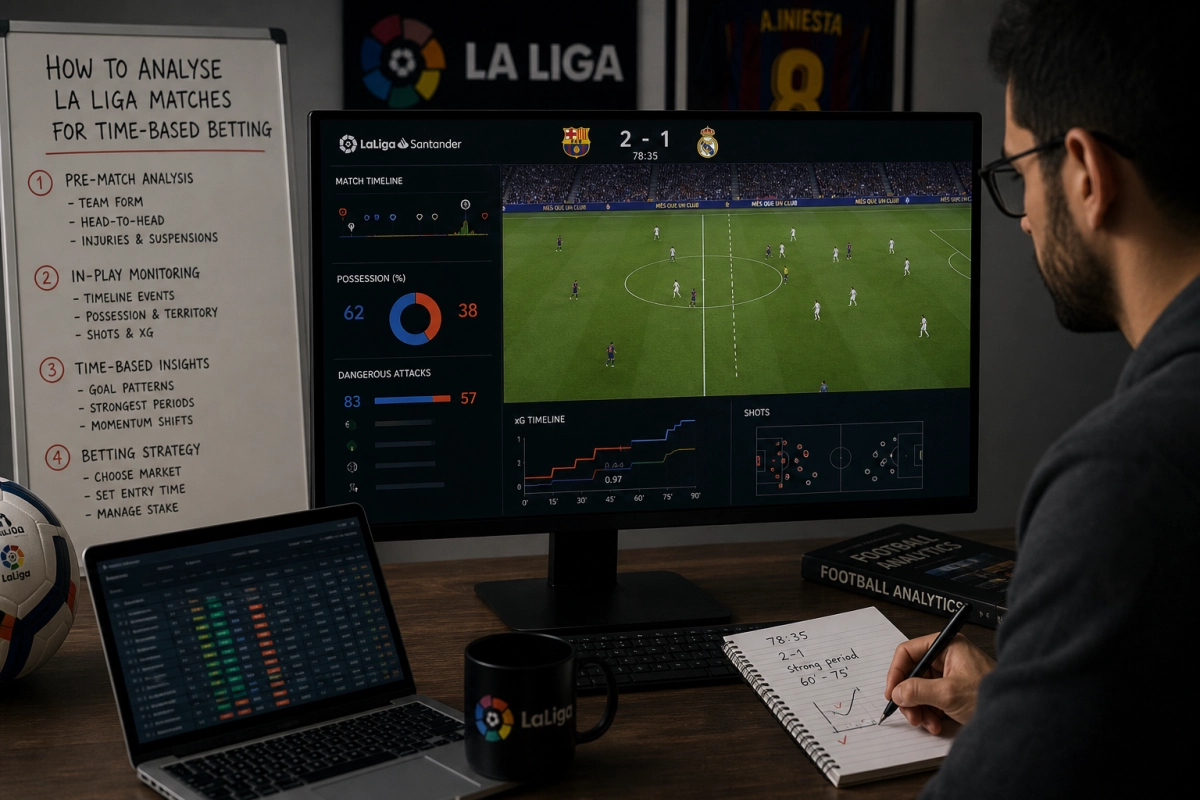
Live match trackers commonly display possession, total attacks, dangerous attacks, shots, shots on target, corners and cards. These figures are most useful when considered together rather than separately.
Possession and territory
Possession indicates which team controls the ball for longer, but it does not measure the quality of that control. A team may pass the ball around its defenders without seriously testing the opposition. Territory is more meaningful when possession leads to forward passes, box entries, crosses or sustained pressure near the opponent’s goal.
Shots and shots on target
Total shots provide a starting point, but their location and quality matter. Several attempts from outside the penalty area may be less threatening than one close-range effort. Shots on target generally provide stronger evidence of attacking effectiveness, although the goalkeeper’s performance and defensive blocks also require consideration.
Attacking pressure
Dangerous attacks, corners and repeated final-third possession can reveal territorial pressure. However, live statistics may be recorded differently across providers, so they should not be treated as perfectly precise measurements. A stronger assessment looks for a consistent pattern:
- possession that reaches advanced areas;
- regular shots or shots on target;
- attacks that force saves, blocks or defensive clearances;
- space created by tactical movement; and
- signs that one defence is struggling to manage pressure.
The current score must remain central to this analysis. A team leading by one goal may deliberately surrender possession and defend deeper, while the losing side may produce high attacking numbers because it has to take greater risks. Therefore, a statistical advantage is not automatically a reason to choose the match result or a goals market.
Match state, cards and tactical changes
Time remaining changes the meaning of every statistic. Early pressure may have many opportunities to develop, while similar pressure in the final minutes may produce fewer realistic scoring chances. A late goal can also transform markets such as over and under goals, both teams to score and draw no bet.
Cards are another important factor. A red card can change possession, defensive shape and the likely number of chances. Even a yellow card may affect a full-back or central defender’s willingness to challenge. Substitutions should also be examined: an attacking replacement may signal greater urgency, while a defensive substitution can indicate an attempt to protect the score.
These observations provide the foundation for comparing the match result, over and under goals, both teams to score and draw no bet markets in the next stage.
Match result and draw no bet require a clear performance edge
The match result market is most suitable when the live evidence supports one team over the other and the remaining time is sufficient for that advantage to matter. A side that is leading, controlling territory and creating better chances may justify continued support, but the price should still reflect the possibility of a tactical change or late reaction from the opponent.
When the score is level, the decision is more demanding. A team may look stronger without converting its pressure into clear chances, while an apparently even match may contain a significant difference in attacking quality. Before considering a home or away win, compare shots on target, penalty-area entries, defensive errors and the way each side responds after losing possession.
Draw no bet can be more appropriate when one team appears stronger but the evidence is not sufficient to dismiss the draw. This market removes the draw outcome, although the potential return is usually lower than backing the team to win. It may be particularly relevant when a favourite has territorial control but is creating only modest opportunities, or when the opponent is defending well and remains dangerous on the counter.
The current score must be interpreted alongside motivation. A leading team may have little reason to attack, while a losing team may become increasingly exposed. If the stronger side is protecting a narrow lead and has introduced defensive players, backing it to win may be less attractive than assessing whether the opponent can equalise.
Choosing over and under goals from the remaining game
Over and under goals markets depend on both what has already happened and what the match is likely to produce next. If two goals have been scored early, an over line may still require caution if the teams have since become compact and chances have declined. Conversely, a goalless match can offer over-goals potential when both sides are creating clear opportunities and leaving space behind their defensive lines.
Time remaining is essential. A match with twenty minutes left needs a different level of attacking evidence than one with an entire half still to play. Review the tempo after substitutions, the number of players committing forward and whether the team needing a goal is creating pressure rather than simply holding possession.
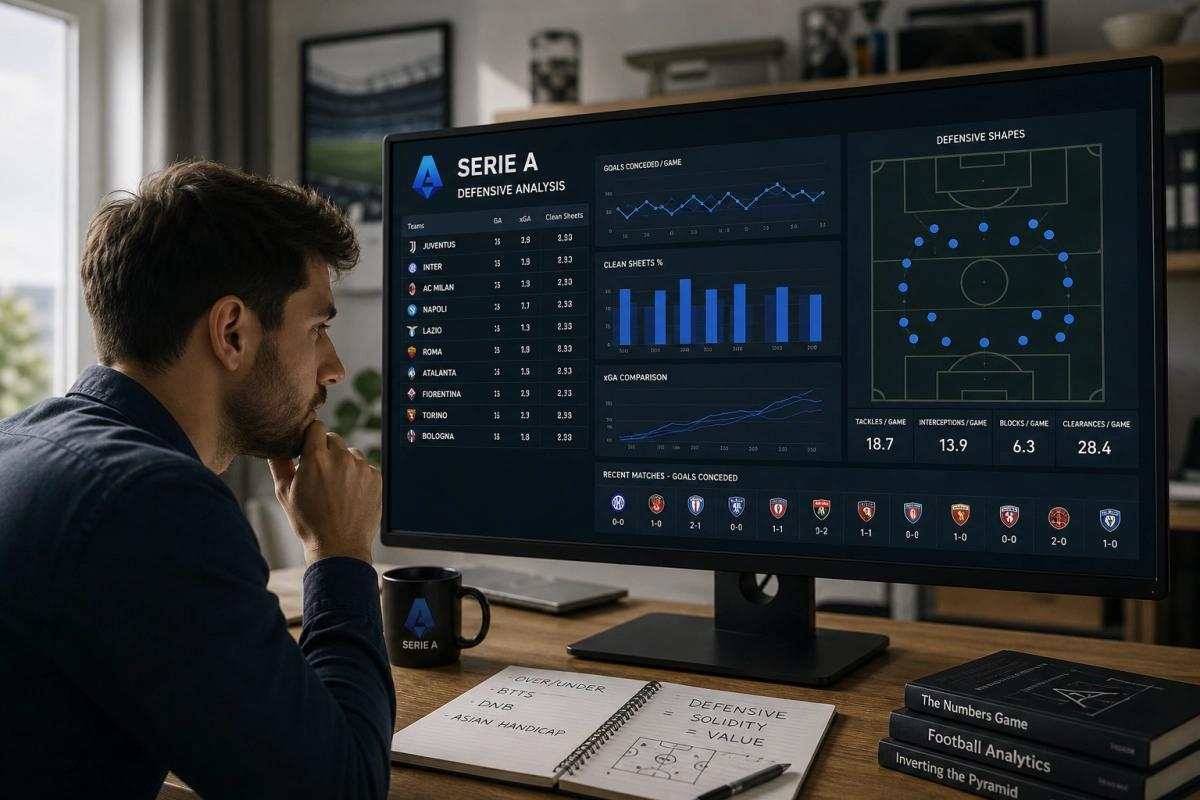
Under-goals selections become more credible when the leading side controls the ball safely, the opponent lacks shots on target and the match has settled into a slow rhythm. However, a red card, tired defenders or repeated set pieces can undermine an otherwise cautious reading. The bettor should also check whether the scoreline is forcing one team to abandon its original shape.
Assessing both teams to score before entering
Both teams to score requires evidence that each side can create or exploit a scoring opportunity. One team’s dominance is not enough. If the other has produced few attacks, lost its main forward to injury or is playing with ten men, the case for both teams to score may weaken even if the match has been open.
Look for different routes to a goal, such as counter-attacks, set pieces, individual errors and sustained possession. A team that has already scored may continue attacking, or it may retreat and reduce the opponent’s opportunities. This tactical response, combined with the time remaining and current score, should be assessed before choosing the market.
Make the decision only when the evidence is clear
In-play markets should be approached as decisions under changing conditions rather than opportunities that must be taken immediately. If the available evidence is inconsistent, the most sensible choice may be to wait for another phase of play or avoid entering the market altogether.
Any selection should also be measured against its price. A team may look likely to score, but the available odds may already account for that pressure. Compare the perceived probability with the potential return, set a clear stake limit and avoid increasing exposure simply because the match has become more dramatic.
The strongest live betting process remains patient and disciplined. When the score, match pattern, tactical developments and market price point in the same direction, a decision has a clearer foundation. When they conflict, caution is usually more valuable than forcing a selection.