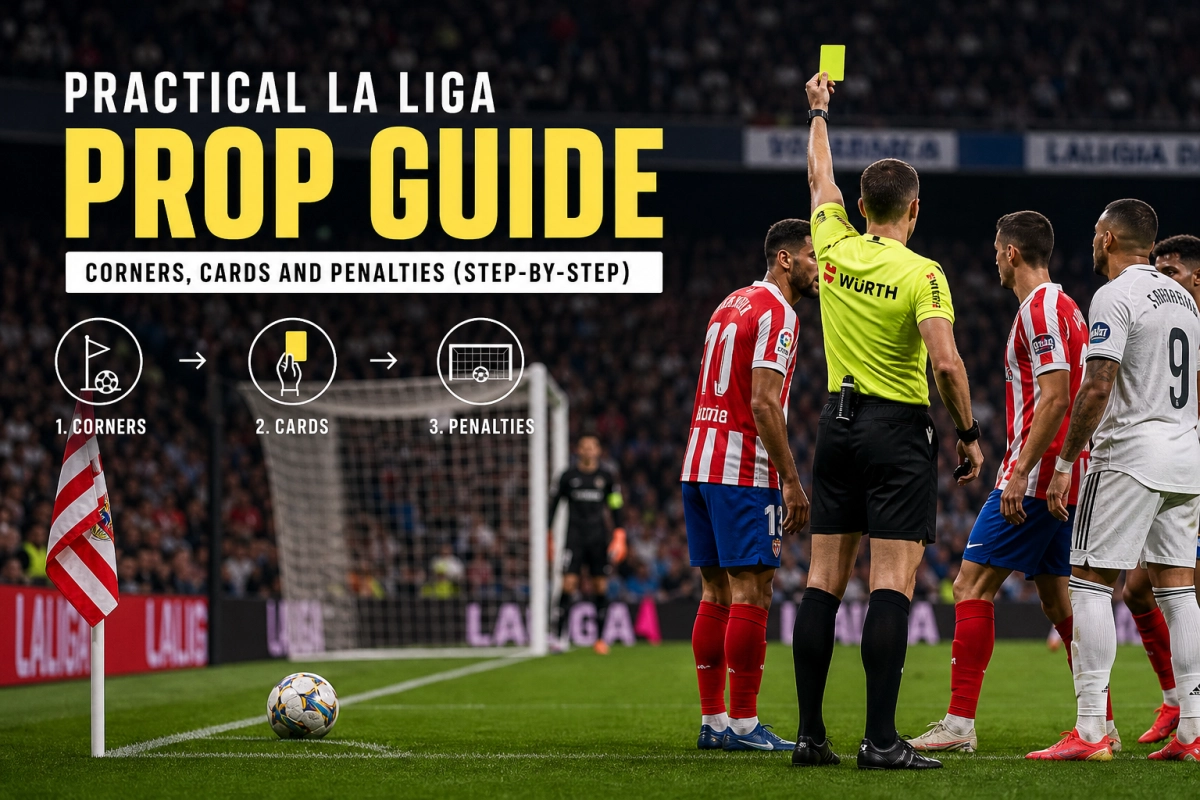
Reading La Liga prop markets for corners, cards and penalties
This guide explains how to evaluate La Liga betting markets for corners, yellow/red cards and penalties without relying on live odds or invented stats. Readers in Tanzania and other Swahili-speaking markets will learn which match signals matter, how to interpret them before kickoff and during live play, and how to keep betting responsible and manageable.
What this part covers
Part 1 lists the core metrics and match factors to check and gives high-level pre-match and in-play checklists. Later sections will show the step-by-step workflow for applying these checks to a specific La Liga match.
Key metrics and match factors to check
When analysing corners, cards and penalties, focus on observable behaviours and historical tendencies rather than speculative numbers. Use team reports, match footage and official league data sources to verify facts before betting.
-
Attacking wings and crossing frequency
Teams that attack down the flanks and deliver many crosses usually create more corner situations and aerial contests. Check match previews and recent lineups for wing full‑backs or wingers who take set plays.
-
Aerial duel rates and centre-forward style
Tall, physical centre-forwards and teams that target long balls increase corners and aerial fouls that may lead to cards. Review recent match reports for headed shots and contested clearances.
-
Set-piece frequency
High free-kick or corner counts per match suggest more dead-ball opportunities and potential penalty-area scrambles. Look at team summaries and highlight reels to estimate set-piece involvement.
-
Pressing style and defensive aggression
High press teams force turnovers higher up the pitch, creating quick attacks, counters and sometimes rushed defending that leads to cards or penalties. Tactical previews and heatmaps help identify pressing intensity.
-
Referee booking and penalty history
Referees vary greatly in how many yellow/red cards and penalties they award. Check the assigned referee’s recent matches for booking rates and notable penalty decisions—this is a vital market signal.
-
Match context and squad fatigue
Fixture congestion, travel (e.g., Copa del Rey, European matches) and tired squads often produce sloppy defending and late-game cards. Consider travel, rotation and injury lists when assessing risk.
Initial pre-match and in-play checklist (high level)
Use this quick checklist to screen matches before doing deeper analysis.
- Pre-match: Confirm starting XI, referee assignment, recent home/away form, injuries/suspensions, and each team’s set-piece tendencies.
- In-play (first 15–30 minutes): Watch for wing overloads, pace of play, early fouls, referee carding style and whether teams commit defenders forward—these early signs alter corners/cards tempo.
- Context checks: Consider scoreline, substitutions, yellow-card accumulation and minutes-worn players (fatigue) before adjusting expectations mid-game.
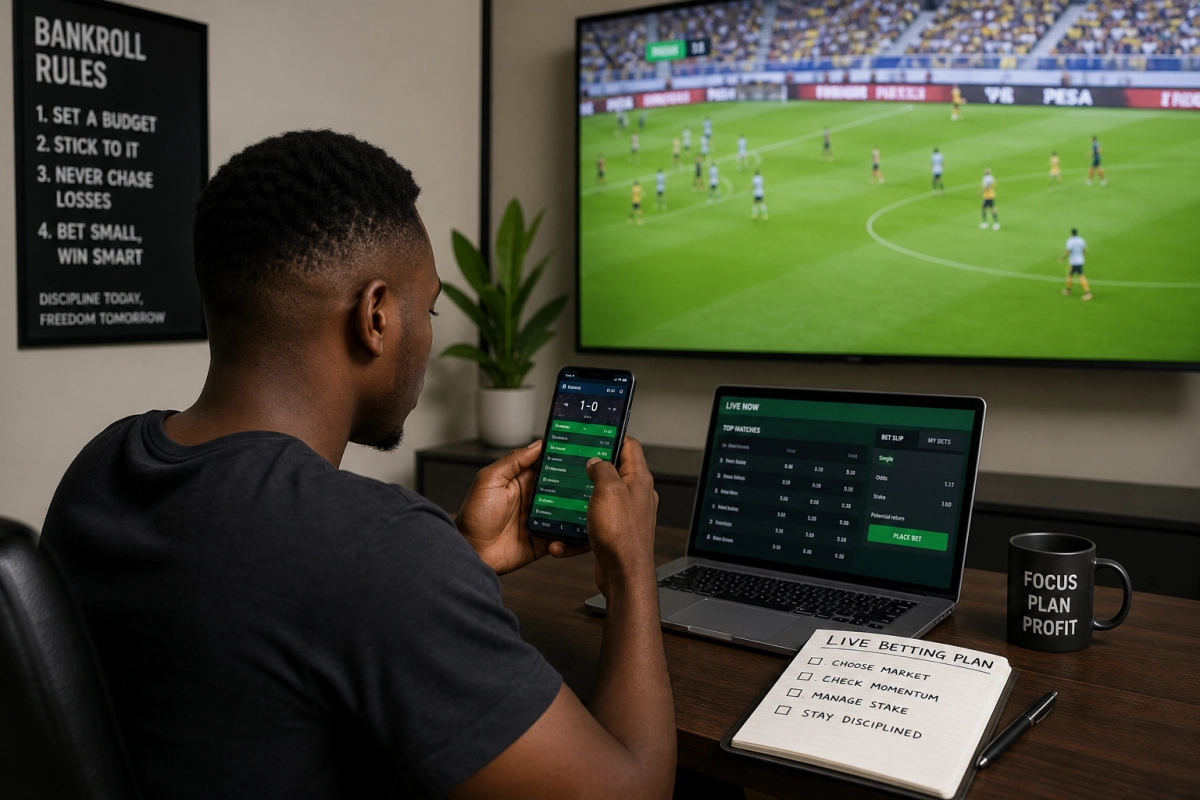
Keep records of observations and limit the number of markets you track per match to avoid overstretching your focus. Always set a budget and stake only what you can afford to lose; treat betting as entertainment rather than income.
Next, the guide will turn these checks into a step-by-step pre-match workflow and an in-play decision tree you can apply to specific La Liga fixtures.
A practical pre-match workflow: step-by-step checks
Turn the high‑level checklist into a repeatable routine you run through for every La Liga fixture you target. Work from the broadest, most reliable signals down to the finer tactical details.
- Confirm the basics first. Check the confirmed starting XIs, formation (especially wingbacks/advanced full‑backs), and the referee assignment. If a key wide player or a regular set‑piece taker is absent, mark the match as lower priority.
- Referee and team disciplinary context. Scan the referee’s recent fixtures for booking and penalty patterns; review any recent controversial decisions that might indicate a stricter or looser interpretation. Pair that with each team’s last few matches to see if defenders are accumulating yellows or playing more recklessly than usual.
- Tactical profile and attacking routes. From previews, heatmaps or quick highlight clips, decide whether each team predominantly attacks through wide areas, plays direct aerial balls, or relies on central combinations. This decides whether corners or penalties are more likely.
- Set‑piece personnel and routines. Identify who takes corners and free kicks, whether teams use short corners, and whether the opposition defends zonally or man‑to‑man. That determines the quality and frequency of corner outcomes and how fouls in the box may arise.
- Fixture congestion and rotation risk. Note recent midweek games, international travel and injury lists. Rotated or fatigued backlines increase the chance of late fouls and sloppy defending; full‑strength energetic sides generally concede fewer penalties and cards.
- Choose the market and a pre-match plan. Only pick one or two markets you understand well for that fixture (e.g., total corners, any red card, team to win a penalty). Decide your maximum stake and a clear stop‑loss before you place anything.
Keep a short pre-match note for each fixture: starting XI, referee, one-line tactical edge and your planned market and stake. This record speeds up post‑match review and builds pattern recognition over time.
An in-play decision tree for corners, cards and penalties
Use the first 20 minutes as a calibration window. If early signs match your pre-match expectations, maintain the original plan; if not, re-evaluate before committing more stakes.
- 0–20 minutes: Look for wing dominance, set-piece attempts and how the referee handles challenges. If the referee is issuing early cards for tactical fouls, raise expectations for subsequent card markets; if he is letting play go, lower them.
- If the game becomes end-to-end: Expect more corners and potential penalties from chaotic defensive actions. Prioritise corner markets and “team to win a corner” rather than relying on a single penalty outcome.
- If one team parks deep: That usually increases corners against the defending team and reduces clear penalty chances unless the pressing team forces errors in the box. Adjust to favour corners over penalties.
- Scoreline and substitutions: A trailing team late in the game increases attacking corners and risk of defensive fouls; a leading team making defensive substitutions or time‑management tactics raises card probability for the trailing side. Use these context shifts to decide whether to hedge, press on, or cash out according to your pre-set limits.
- Red card or send‑off: Pause and reassess—cards and penalties become far more likely after a dismissal. Avoid emotional betting; consult your pre-defined stop‑loss and stake rules before placing follow‑up bets.
Interpreting signals: reliability, pitfalls and responsible betting
Not every signal is equally reliable. Prioritise confirmed facts—starting XIs, referee appointment and observed in‑game behaviour—over single-match anecdotes. Treat referee patterns and consistent tactical styles as stronger predictors than one-off highlights or social‑media claims.
Common pitfalls to avoid: overreacting to a single late penalty in a team’s history, chasing losses after a surprise red card, or taking multiple correlated markets on the same match without adjusting stake. To manage risk: limit stakes to a small, predefined fraction of your bankroll per bet, set daily and per‑match loss caps, and keep a simple log of bets and outcomes so you can review what worked and what didn’t.
Betting should be deliberate, not impulsive. Use the pre-match workflow and in‑play decision tree to make calm, evidence‑based choices; if you feel pressured or emotional, stop and return another day. Treat this process as entertainment and skill development rather than guaranteed income.
Putting the process into practice
Use the routines and decision rules in this guide as a framework rather than a rigid formula. Building a reliable feel for corners, cards and penalties in La Liga takes repetition, careful note‑taking and the discipline to stick to your bankroll and stake rules. Make small, deliberate steps: test the workflow, learn from mistakes, and keep emotion out of in‑play choices.
Actionable next steps
- Run the pre-match workflow on a small set of fixtures each week until it becomes fast and instinctive.
- Keep a concise log (match, market, stake, decision trigger, outcome) and review patterns fortnightly to refine which signals are most predictive for you.
- Practice in low‑risk environments first: paper bets or minimal stakes while you calibrate your reading of referees, team tactics and in‑game dynamics.
- Limit yourself to one or two markets per match to avoid correlated exposures and decision fatigue.
- Set explicit stop‑loss and session limits before you start watching a game and honour them regardless of short‑term results.
Responsible-betting reminders
- Treat betting as entertainment and skill development, not a source of guaranteed income.
- Never stake more than a small, predefined percentage of your bankroll on any single selection.
- Avoid chasing losses, increasing stakes after emotional triggers, or placing bets when fatigued or distracted.
- If betting starts to feel compulsive or harmful, stop, seek support and use available local resources for help.
- Regularly step back and reassess your approach; sustainable progress comes from steady practice, disciplined staking and honest review.
Keep the process simple, keep records, and keep control. Over time, the repeatable checks and calm in‑play decisions outlined here will sharpen your instincts and help you make clearer, more responsible choices in La Liga prop markets.