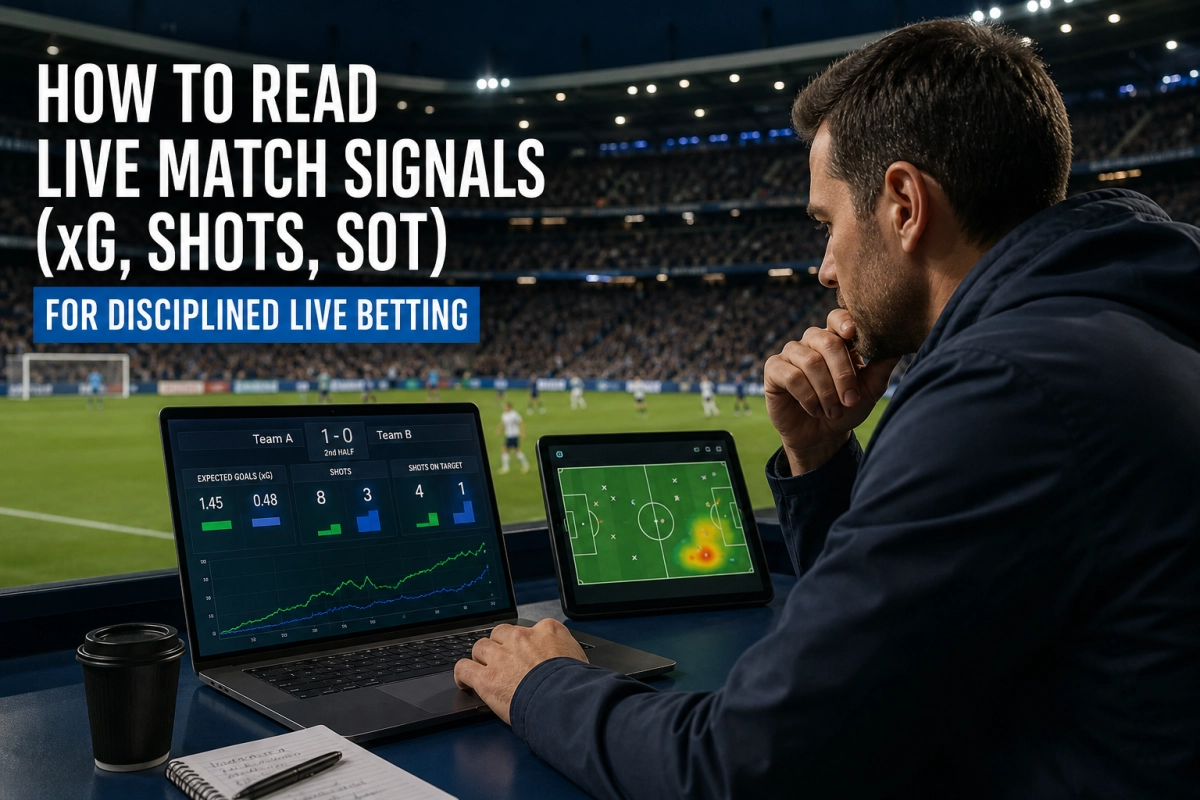

How xG, shot maps and pressing metrics clarify Over/Under and BTTS markets
This guide explains how to use expected goals (xG), shot-location maps, pressing intensity (PPDA) and chance-creation patterns to evaluate Over/Under and Both Teams to Score (BTTS) markets when Betting on Premier league matches. Readers will learn what each metric means, how it affects goal probability, and simple steps to combine them into pre-match insights useful for both beginners and regular bettors in Tanzania and other Swahili-speaking markets.
Key metrics explained for practical match analysis
Begin by defining each metric before applying it to markets. Clear definitions help avoid over-reliance on a single stat.
Expected goals (xG): quality, not just quantity
- What it measures: xG estimates the probability a shot becomes a goal based on location, body part, situation and defensive pressure.
- How to use it: Compare a team’s average xG for and against over recent matches to judge whether they are creating or allowing quality chances. A team consistently producing 1.8 xG per match suggests more likelihood of multiple goals than a team at 0.9 xG.
- Beginner tip: If both teams average above ~1.3 xG, BTTS and Over 2.5 are more plausible; if both under 0.9, low-scoring markets are more realistic. Always verify current form before acting.
Shot-location maps and what they reveal
Shot-location maps show where shots originate and the danger zones. Shots from inside the six-yard or central box carry much higher xG than long-range attempts.
- Identify teams that create central high-xG shots (penalty box, quick cuts). These teams often convert at higher rates, supporting Over markets.
- Teams that create many low-xG long shots may look active but not threaten high scoring — that can be a reason to avoid heavy Over wagers.
Pressing intensity (PPDA) and chance-creation patterns: tactical context for goals
PPDA (Passes allowed Per Defensive Action) measures how aggressively a team presses. Lower PPDA = stronger pressing, which affects transitions and goal chances.
Applying PPDA and chance patterns to market selection
- High press vs. weak buildup: A low-PPDA team facing a side that struggles to play out can force turnovers and high-quality chances — useful when considering Over or BTTS markets.
- Counter teams: Teams that defend deep but counter can create a few very high-quality chances; this can make BTTS plausible even if overall shot volume is low.
- Combine metrics: Look for matches where both teams have high xG-for and high PPDA pressure allowed (they concede under pressure). This alignment increases the probability of multiple goals.
Always cross-check these patterns with recent injuries, suspensions and expected line-ups; tactical changes or missing key attackers can materially change xG and press outcomes. Responsible betting reminder: set a budget, use affordable stakes and treat betting as entertainment rather than income.
Next, the article will show a step-by-step workflow and example checks to turn these metrics into concrete pre-match market assessments for Over/Under and BTTS selections.
A step-by-step pre-match workflow to convert metrics into a market view
Follow these practical steps before placing an Over/Under or BTTS wager. Keep the process quick — you want a repeatable checklist that fits into normal pre-match preparation.
- Collect a short, relevant sample. Use the last 6–8 competitive matches for each team (longer if form is consistent). Pull: average xG-for, xG-against, shot-location breakdown (central box vs long-range), and PPDA.
- Calculate simple probabilities. Convert team xG to expected goals-per-game. A useful rule of thumb: combined xG-for (home + away) ≈ expected total goals. If combined xG > 2.4, Over 2.5 becomes plausible; combined xG
- Check shot-quality alignment. If combined xG suggests multiple goals but both teams’ shots are mostly from low-xG zones (wide or long range), downgrade your confidence in Over markets. Conversely, high proportion of central box attempts increases conviction.
- Layer in tactical context. Compare PPDA figures and playing styles. Low-PPDA opponent vs a side that concedes many high-xG chances increases likelihood of multiple goals—favour Over or BTTS. Deep-defending teams that concede few shots but allow high-quality counters make BTTS plausible even if xG is moderate.
- Adjust for situational modifiers. Injuries, suspensions, rotation risk (European midweek, fixture congestion), weather and travel can swing expected output. Penalise attacking xG if a primary creator/striker is absent; increase variance if teams rotate lineups.
- Compare to bookmaker markets and implied probability. Convert odds to implied probability and compare with your xG-backed estimate. Only place bets where your probability exceeds the market’s implied probability by a margin that covers bookmaker vig and desired edge.
- Size your stake and set limits. Use smaller stakes for higher-variance propositions (e.g., Over 3.5) and larger for robust edges (both teams consistently >1.0 xG). Record the rationale for each bet to refine the process over time.
In-play signals and quick hedges to protect pre-match positions
Markets move quickly in-play; monitoring a few live metrics helps you keep or exit a pre-match stance without overtrading.
- Watch live/shot xG flow. If early minutes show lots of high-xG chances but the score is still 0–0, the probability of late goals rises — consider holding or even increasing a small stake on Over/BTTS. If early xG is exhausted (lots of long-range attempts) and the expected goals remain low, consider cashing out.
- Track tactical changes. Substitutions that increase pressing or introduce a clinical striker materially change probabilities. A defensive substitution by a team that was chasing suggests a reduction in total goals expectation.
- Use trigger-based hedges. Set clear rules: for example, if a late equaliser arrives and xG indicates few remaining chances, hedge a pre-match Over. Or if a team concedes an early soft chance and you have BTTS, buy a small hedge on No BTTS if expected continuation is low.
- Leverage corner and shot quality counts. High shots on target and corners without goals signal persistent threat — markets will often underprice imminent goals, creating opportunistic in-play value.
These workflow steps plus quick in-play checks let you move from raw metrics to disciplined market decisions. Part 3 will walk through a short worked example using a Premier League fixture and show how the numbers translate to staking and timing.
Practice drill: one-minute pre-match check
- Pick the fixture and open the last 6–8 matches for both teams.
- Note combined xG-for (home + away) and whether combined value is clearly above or below your Over 2.5 threshold.
- Scan the shot map: is a high share coming from the central box or mainly from distance/wide positions?
- Compare PPDA: is one side pressing aggressively into an opponent that struggles to play out?
- Adjust for obvious situational factors (key absences, rotation risk) and convert the outcome into an implied probability to compare with market odds.
- If you act, size the stake according to confidence and variance—smaller for higher-variance markets like Over 3.5 or long-shot BTTS bets.
Final guidance for disciplined use
Metrics like xG, shot-location maps and PPDA are tools — not guarantees. Use them to structure decisions, sharpen timing, and manage risk rather than to chase certainty. Build simple habits: test ideas with small stakes, keep a short journal of hypotheses and outcomes, and review results regularly to separate skill from luck.
Maintain discipline around bankroll, avoid overreacting to single matches, and be honest about when your edge has disappeared. With steady practice and measured stakes, these analytical approaches can improve clarity and confidence in Over/Under and BTTS markets without turning betting into an emotional or financial risk beyond what you planned.