Understanding Live Betting During a Football Match
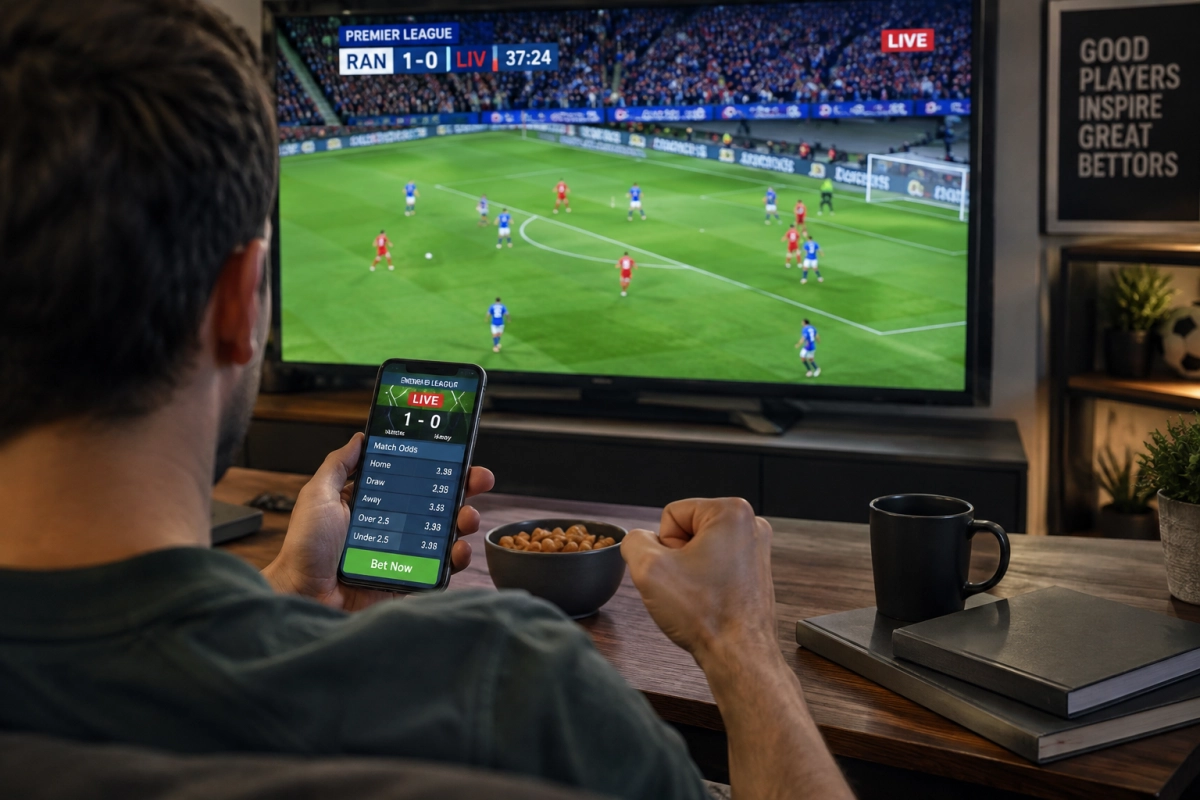
Live betting allows a bettor to place a football wager after the match has started, when the score, performance and game conditions are already visible. Unlike pre-match betting, live odds change continuously as the market reacts to events on the pitch. This guide explains how goals, possession, attacks, cards, substitutions and momentum can influence prices, while showing how to compare markets before making a disciplined decision.
For example, a pre-match match-winner price may change significantly after an early goal. The team leading usually becomes shorter in the win market, while the losing side becomes less likely according to the market. However, the score is only one part of the assessment. The match minute, quality of chances, tactical response and remaining time also affect the odds.
How In-Play Odds Respond to Match Events
Bookmakers and betting platforms continuously reprice markets using the latest match information. Markets may also be suspended briefly after a goal, penalty or red card while the new prices are calculated. Once betting resumes, the available odds may be different from those shown moments earlier.
Goals and time elapsed
A goal normally produces the fastest change in live betting odds. A team that takes an early lead may attract shorter prices in the match-result market, but the value of that price depends on how much time remains and how convincing the performance has been. A late goal can have an even stronger effect because there is less time for the trailing team to recover.
Time is also important in totals markets. Over 2.5 goals means the match must finish with at least three goals, while under 2.5 requires two or fewer. If a match remains goalless for a long period, the price on over goals may increase, but that does not automatically make it a better option. The bettor still needs to consider shot quality, attacking intent and the likelihood of late tactical changes.
Possession, attacks and chances
Possession describes how long each team controls the ball, but possession alone does not prove that a team is creating danger. A side may hold the ball in safe areas without producing clear chances. Live match statistics should therefore be read together with shots, shots on target, corners, attacks and dangerous attacks.
- Possession: indicates control but not necessarily attacking effectiveness.
- Attacks: show how often a team moves into advanced areas.
- Dangerous attacks: can suggest greater pressure near the penalty area.
- Shots on target: provide a stronger indication of testing the goalkeeper.
These figures are most useful when they agree with what is happening on the pitch. A bettor watching a Tanzanian Premier League match or an international fixture can compare the statistics with the teams’ tactics, recent form and expected line-ups rather than reacting to one number.
In the next section, the focus moves to cards, substitutions, momentum and the practical process of comparing live markets before placing a bet.
How Cards and Substitutions Change the Live Picture
Cards can alter the balance of a match even when the score remains unchanged. A booking for a defender may make that player more cautious in challenges, creating space for an opponent’s winger or striker. A yellow card for a midfielder can also reduce pressing intensity and make it harder for the team to disrupt attacks. However, one booking is not automatically a signal to bet against that player’s team. The player’s position, the referee’s style and the match tempo all matter.
A red card usually has a much greater effect. The team with ten players may defend deeper, concede possession and create fewer chances, while the opposition may shorten in the match-result and next-goal markets. Even so, the timing of the dismissal is important. A red card in the first half gives the stronger team more time to use its numerical advantage, whereas a dismissal late in the match may have a limited effect on the final result.
Substitutions provide further clues about a coach’s intentions. Bringing on a forward can indicate that a team is trying to chase the match, while replacing an attacker with a defensive midfielder may suggest that protecting a lead is the priority. The reason for a substitution should also be considered. An injured player, tactical adjustment or tired legs can each produce a different interpretation. Live odds may move quickly when a key player is replaced, so it is important to check whether the new price still reflects the likely impact.
Reading Momentum Without Overreacting
Momentum describes the direction of pressure during a particular period, but it is not a guarantee that the next major event will follow. A team may produce several corners and shots in succession, forcing the opponent to defend deeply. This can shorten its price in some markets, especially if the pressure is sustained. Yet a counter-attacking side may still create the clearer opportunity from one fast break.
To assess momentum more carefully, look for a combination of evidence: repeated entries into the penalty area, shots on target, dangerous set pieces and visible changes in territory. It is also useful to consider whether the pressure is caused by genuine attacking quality or by the leading team deliberately allowing possession. Avoid treating a short burst of activity as proof that a goal is imminent.
Comparing Live Markets Before Making a Decision
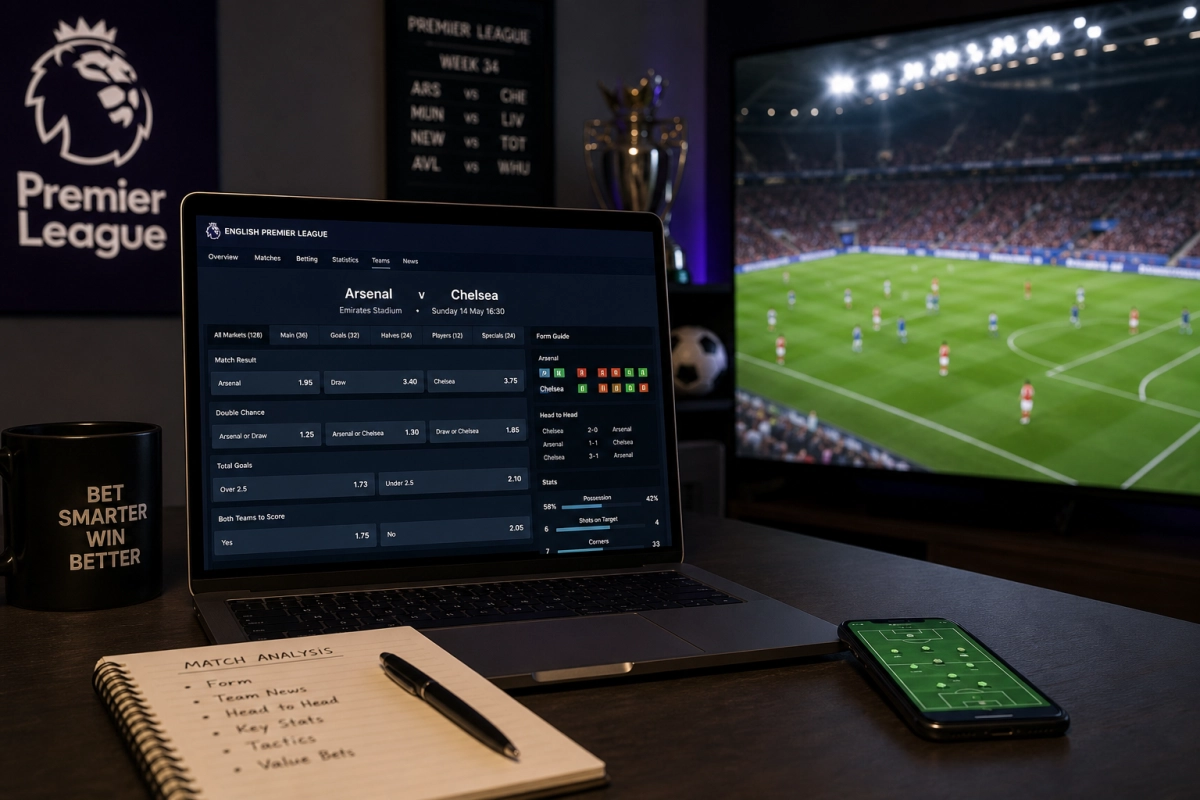
Several markets may describe the same match situation in different ways. The match-result market focuses on the final winner, while double chance covers two of the three possible results. Draw no bet removes the draw as a losing outcome, although the odds are generally lower. Goal markets, including over or under totals and both teams to score, may offer a more direct way to express an opinion about the match.
Before placing a bet, compare the available prices and identify what each selection requires. A team may look likely to avoid defeat, but its price may be too short to offer worthwhile value. Likewise, a live over-goals bet may appear attractive after sustained pressure, but the odds need to account for the time remaining and the current score. Check the rules for settlement, especially for markets involving cards, corners or player statistics.
A disciplined process means deciding the reason for the bet, the acceptable odds and the maximum stake before clicking confirm. If the market moves beyond that price, wait or pass rather than chasing it. Live betting creates frequent opportunities, but no opportunity has to be taken.
Making Better Decisions in Live Betting
Live betting is most effective when patience and preparation guide every decision. Match events can create attractive prices, but they can also encourage rushed reactions and emotional bets. Take time to assess the situation, compare the available markets and decide whether the odds genuinely justify the risk.
Set a clear budget and staking plan before the match begins, and accept that passing on a market is often the most disciplined choice. No statistic, run of pressure or price movement can remove uncertainty from football. By staying selective and avoiding the urge to chase losses or follow momentum blindly, bettors can approach in-play markets with greater control and clearer judgement.