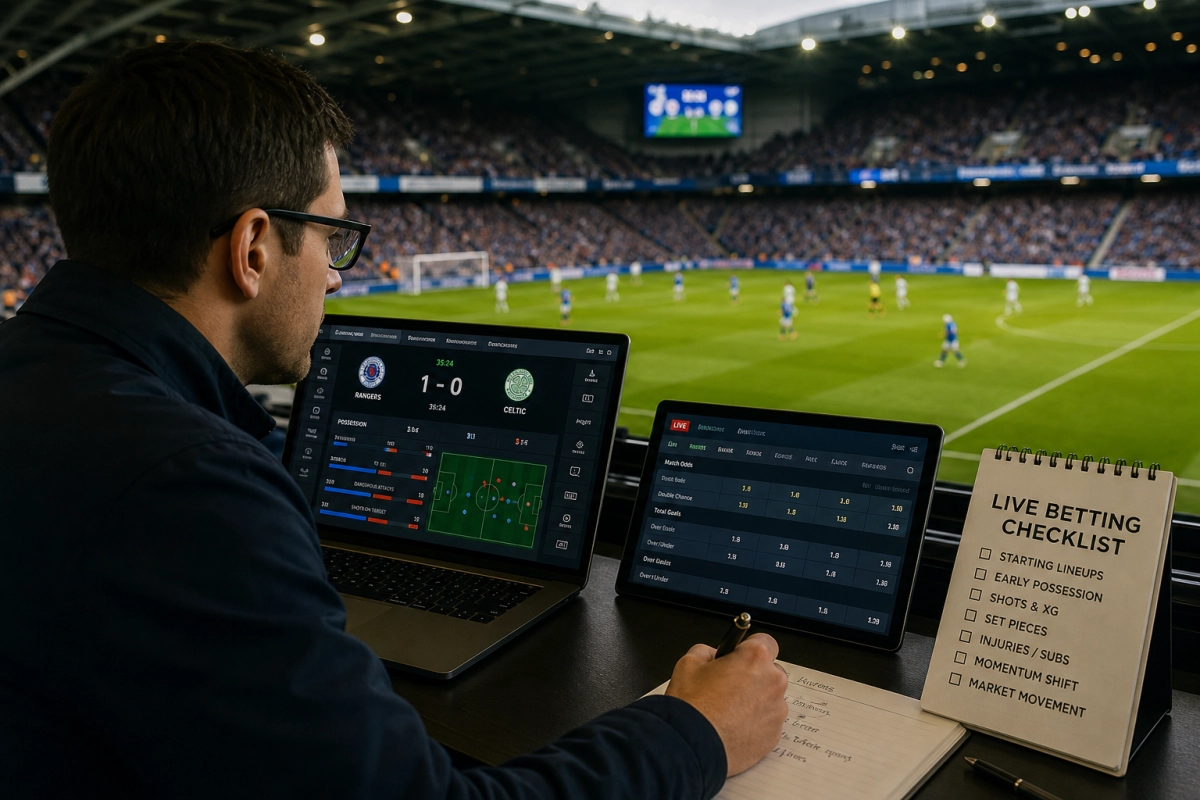

Referee and VAR trends every La Liga bettor should check before backing cards, penalties or free-kick markets
This guide explains how to use referee assignments, historical discipline records and VAR behaviour to inform La Liga betting on cards, penalties and free-kick markets. Readers will learn which referee and VAR metrics matter, how to build a simple pre-match checklist and what live signals to watch for during in-play betting. The focus is practical: how to spot potential value without claiming any bet is guaranteed.
What to check pre-match: a compact referee and discipline checklist
Before placing a pre-match or in-play bet, run through a short, repeatable checklist. This helps turn observations into disciplined betting decisions.
- Referee assignment: who is officiating and whether they have a known tendency for cards, fouls or penalties.
- Referee historical discipline: average yellow/red cards per game, fouls called, and penalties awarded in La Liga matches they refereed.
- VAR team and official: whether VAR tends to review decisions for that referee and the common outcome of reviews (confirm, overturn, upgrade).
- Match context: teams’ disciplinary records, tactical styles (aggressive pressing vs. possession), recent form and any known suspensions or injuries.
- Timing and stakes: are teams fighting relegation or title positions? High-stakes games often see more cards and VAR reviews.
How to interpret these items
- If a referee averages more yellows per 90 minutes and consistently awards penalties, that increases the baseline probability for card and penalty markets—but always compare with the teams’ styles.
- VAR behaviour is not binary: note whether VAR frequently intervenes to award penalties or tends to uphold the on-field call. This affects both pre-match and in-play expectations.
- Home/away bias: some referees are stricter with away teams or issue more cards late in matches. Use that when considering team-card props or late-game card markets.
Key betting markets and simple definitions for beginners
Understanding market definitions avoids confusion when analysing referee trends.
- Total cards: combined number of yellow and red cards in the match. Useful when a referee is card-prone.
- Player/team card markets: bets on a specific player or which team will receive more cards.
- Penalty awarded (match or player): whether a penalty will be given during the 90 or to a specific team/player.
- Free-kick/set-piece markets: some bookmakers offer free-kicks or corners counts; referee foul-calling tendencies influence these.
- In-play markets: markets that change during the match—ideal for reacting to referee style and VAR checks once the game pattern is visible.
Practical tip: never rely on a referee stat in isolation—combine it with team tactics, injuries, and the likely line-ups. Always verify the latest team news and officiating appointments before staking money. Bet only within a set budget and treat betting as entertainment.
Next, the guide will show where to find reliable referee and VAR data for La Liga, how to organise it into a simple spreadsheet and concrete examples of pre-match and live scenarios that offer potential value.
Where to find reliable referee and VAR data for La Liga
Good data is the backbone of any referee-based betting approach. Combine official sources with independent databases and local reporting to get a full picture.
- Official LaLiga resources: the league website and match reports publish appointments, basic disciplinary totals and sometimes post-match summaries. Use these to confirm referee and VAR assignments and for a baseline of cards/fouls per game.
- Stat aggregators (free): WhoScored, SofaScore and FBref provide match-by-match referee pages, cards/fouls/penalties and simple per-90 figures. These are usually up-to-date and easy to scrape into a spreadsheet.
- Advanced / paid providers: Opta, StatsBomb and Wyscout offer richer event-level data (challenge location, contact type, xG on penalty-area events) useful if you want deeper models. Not required for a profitable approach, but helpful for refinement.
- Referee-specific sites and trackers: some independent sites compile referee histories and trends (e.g., penalties awarded by referee, late-card tendencies). Look for those that clearly cite their sources.
- Local media and social accounts: Spanish outlets (Marca, AS) and beat reporters often publish referee appointments, any controversies and notes on VAR crews. Twitter/X feeds for LaLiga referees and VAR analysts can be quick ways to spot appointments, injuries or known biases the databases miss.
Practical tip: cross-check multiple sources before you rely on a stat. Databases sometimes differ on what counts as a foul or a card credited to a referee after post-match adjustments.
How to structure a simple referee & VAR spreadsheet
Keep your sheet compact and actionable so you can scan match lists quickly each betting day. Columns you should include:
- Match date / Home / Away / Competition
- Referee name / VAR name
- Referee metrics: yellows per 90, reds per 90, fouls called per 90, penalties awarded per 90, cards after 75’ (per season)
- VAR metrics: reviews per game, overturn rate (% of reviews that change the on-field call), penalty-award rate on review
- Referee biases: home vs away card differential, tendency to show early cards (0–15’) and late cards (75–90’)
- Teams’ discipline: fouls per 90, yellows per 90, aggressive duel rates or high pressing indicators
- Context flags: derby/relegation/fixture congestion, key player absences
How to use it: compute a few derived columns — e.g., expected cards = referee yellows per 90 + team adjustments — and a simple z-score to see extremes. Colour-code rows where the referee’s card or penalty rate is >1 SD above (or below) league average and where VAR overturn rate is unusually high. Those flags identify potential value opportunities quickly.
Concrete pre-match and in-play scenarios that often offer value
Below are repeatable scenarios you can screen for and the kinds of bets they commonly favour.
- High-card referee + heated derby: pre-match lean to Over total cards or team card props for the more aggressive side. If the referee also issues many late cards, consider markets covering 75’+ cards.
- Referee awards penalties frequently + team with high box entries: pre-match penalty market or the team-to-get-penalty selection. If VAR has a high overturn/award-on-review rate, that strengthens the bet.
- Quiet opening 20 minutes but referee is aggressive: in-play: if fouls count is already high, live odds for cards or a penalty often shorten — back them when market underprices continued strictness.
- Clear soft contact in box early, VAR active: in-play: if referee initially waves on a foul but VAR is known to intervene, watch for a slow stoppage and consider a small stake on penalty awarded markets once a check is announced.
Always size stakes to the confidence of the signal (multiple flags = larger edge) and update your sheet after the match — adding outcomes improves your future screening and keeps the model honest.
Final advice for applying referee and VAR insights
Treat referee and VAR analysis as a skill you develop, not a shortcut to guaranteed wins. The value comes from disciplined routines, consistent record-keeping, and honest feedback about what works and what doesn’t.
Practical habits to keep
- Start small: test ideas with low stakes and clear success metrics before scaling up.
- Log every bet and the officiating context so you can spot persistent edges or failures.
- Update your spreadsheet and flags weekly — referees, VAR crews and team tactics change over a season.
- Prioritise signals that combine multiple independent flags (referee + VAR + match context).
- Manage bankroll and expectations: even well-founded edges will experience variance.
- Remain adaptable: refine your approach when leagues alter VAR protocols or referee training.
Above all, use these methods to make more-informed, disciplined choices rather than chasing certainty. Responsible, iterative work with referee and VAR data is what produces repeatable value over time.