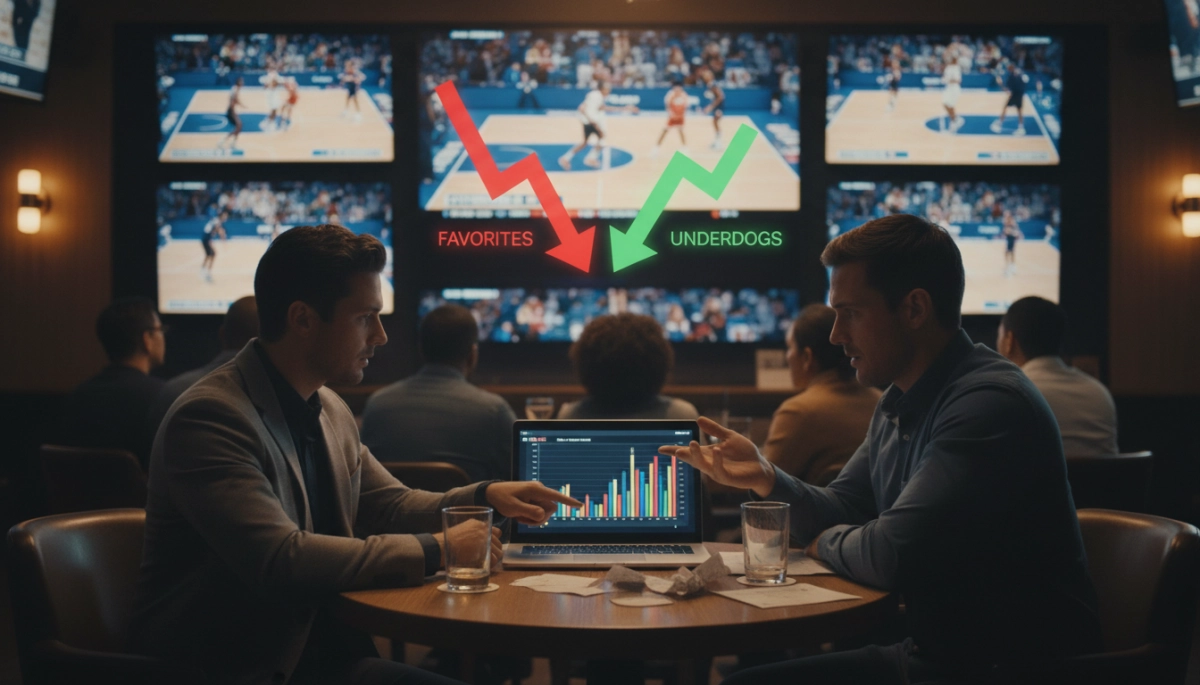

What to expect when you start betting on NBA games
If you’re new to NBA betting, the landscape can feel fast-paced and full of jargon. You’ll see lines change throughout the day, different bet types offered by sportsbooks, and a host of statistics that matter more in basketball than in many other sports. This section gives you the foundational concepts so you can read lines confidently and recognize which bets suit your style.
Key concepts you should master first
- Odds formats: American (+150 / -200), decimal (2.50), and fractional (3/2). You’ll most commonly encounter American odds in NBA markets, which show how much you win relative to your stake.
- Bookmakers and vig: The sportsbook’s margin (vig or juice) affects payouts. Two books can offer different lines — shopping for the best number helps your long-term returns.
- Line movement: Public money, injuries, and lineup news move lines. Early lines may be softer; sharp bettors and books adjust as new information arrives.
- Bankroll and stake sizing: Decide on a unit size (a percentage of your bankroll) and stick to it to manage variance through the season.
Core NBA bet types you’ll use most often
Most of your NBA action will fall into three categories: moneyline, point spread, and totals. Each serves different goals—simple wins, margin-focused bets, or game-flow predictions—and each requires a slightly different approach.
Moneyline: backing the winner outright
The moneyline is the most straightforward wager: you pick which team wins. If the favorite has odds of -180, you’d need to bet $180 to win $100; if the underdog is +150, a $100 bet wins $150. You’ll often use moneylines for bets on short favorites or on underdogs you believe can pull an upset.
Point spread: betting on the margin of victory
Point spreads level the playing field. A favorite might be -6.5, meaning they must win by 7 or more for a bet on them to win. Underdogs get the points (e.g., +6.5). Spreads are popular because they keep most games close from a wagering perspective and remove the need to predict a straight winner.
Totals (Over/Under): betting the combined score
Totals are wagers on the combined points both teams score. If the total is set at 222.5, you decide whether the actual combined score will be over or under that number. Totals require you to evaluate pace, defensive matchups, and key player availability rather than which team will win.
Understanding these fundamentals — how odds translate to payout, why spreads exist, and how totals reflect game pace — gives you the tools to analyze lines instead of guessing. In the next section, you’ll learn about prop bets, live betting strategies, and practical tips for making smarter NBA wagers.
Player and team prop bets: where edges are found (and lost)
Prop bets — wagers on individual player or team events rather than the final result — are among the most popular NBA markets. Player points, rebounds, assists, anytime scorers, and three-point totals dominate, but you’ll also see team-quarter scoring props, win-margin props, and niche events like which team scores first. Props can offer value because they’re a different pricing problem for the book: instead of modeling two teams against each other, books price many individual outcomes, increasing the chance of small inefficiencies.
How to approach props:
- Focus on usage and minutes: A player’s shot attempts and time on court drive most player props. Look for minutes boosts (injuries, foul trouble, rest) and usage spikes (primary ball-handler out, late-game roles).
- Pace and matchup matter: A fast opponent or weak interior defense inflates scoring and rebound opportunities. Opponent substitution patterns can also create minutes windows for bench players.
- Line shopping is critical: Smaller margins on player props mean a few points of value can matter. Compare multiple books and look at props exchanges where available.
- Understand correlation: Multiple props can be positively or negatively correlated (e.g., more minutes helps both points and rebounds), which matters when building parlays.
- Beware of props volatility: Single plays swing props more than other markets. Expect higher variance and size stakes accordingly.
Live (in-game) betting: strategies for momentum and pace
Live betting is where NBA wagering gets fast and tactical. Lines update quickly as possessions accumulate, injuries occur, and coaches adjust rotations. The edges here often come from reading immediate context better than the market: which team is controlling pace, whether a star is carrying extra load, or if foul trouble will limit a key player.
Practical live-betting rules:
- Watch the game if you bet live: The best live bettors are watching the nuances — defensive effort, matchup adjustments, and how bench players are used — not betting blindly from a feed.
- Target short-term markets: Quarter and half lines, next-possession markets, and player micro-props (like next player to score) react fastest to in-game events and offer clearer edges than resetting full-game lines.
- Exploit slow market updates: Some books lag on injury news or lineup confirmations. If a starter is ruled out but the full-game total hasn’t changed yet, there may be immediate value.
- Manage stake size: Live lines swing. Reduce unit size for in-game bets and avoid chasing losses after an emotionally charged turnaround.
- Know when to hedge or cash out: If a pregame multi-leg bet turns shaky because of a late injury, live markets can sometimes let you lock in a profit or cut losses — but only after calculating the remaining risk objectively.
Advanced practical tips and common bettor mistakes
After you’ve mastered bet types and prop/live nuance, refine the little things that separate disciplined winners from recreational losers.
- Line shopping and arbing: Keep accounts at multiple sportsbooks and use a line-tracking tool. Small price differences compound over a season.
- Track everything: Maintain a simple ledger (date, market, stake, odds, result). Reviewing your history reveals strengths and recurring mistakes.
- Respect situational factors: Back-to-backs, travel, time zones, and rest days shift performance. Teams resting a star on the second night is a consistent edge to anticipate.
- Use advanced metrics: Pace, offensive/defensive ratings, opponent-adjusted stats, and lineup net ratings are more useful than raw box-score averages when predicting outcomes.
- Avoid common traps: Chasing parlays because they “feel” lucrative, overvaluing narratives (hot streaks), or betting biased toward favorite teams are predictable losing behaviors.
These actionable approaches — picking the right prop angles, betting live with discipline, and tightening operational habits — will elevate how you convert analysis into value. In the next part we’ll cover staking plans, long-term record-keeping, and how to evaluate your betting ROI over a season.
Bankroll strategy, staking plans, and measuring progress
Staking plans that reduce variance
Choose a staking approach that matches your risk tolerance and the size of your edge. Common, practical options include:
- Flat units — bet the same unit each wager to control emotional swings and make performance easier to evaluate.
- Percentage of bankroll — stake a fixed percentage (e.g., 1–3%) of your current bankroll to scale with wins and losses.
- Kelly-inspired sizing — use a conservative fraction of Kelly only if you can estimate edge reliably; otherwise stick to simpler, lower-risk plans.
Record-keeping and evaluating ROI
Accurate tracking is non-negotiable. Maintain a spreadsheet with date, sport/league, market type, stake, odds, net result, and short notes on rationale. From that data you can calculate key metrics like ROI, strike rate, average odds, and yield by market. For historical stats and advanced splits you can use external databases such as Basketball-Reference to validate assumptions and test models.
- ROI = (net profit / total staked) × 100 — shows efficiency of your wagering.
- Strike rate — percentage of bets won; combine with average odds to judge profitability expectations.
- Edge by market — isolate moneyline, spread, totals, and props to see where you have consistent value.
Closing mindset and practical next steps
Betting sustainably is about process more than short-term wins. Keep your unit size conservative, measure everything, and treat every losing streak as information rather than a mandate to chase. Improve incrementally: refine one market at a time, test hypotheses with small stakes, and only scale when your edge proves repeatable. Maintain discipline around line shopping, and continue learning from both public analytics and game film.
If you’re just getting started tonight, pick one simple plan: set your bankroll, define your unit, open accounts at two or three books, and place small, purposeful bets while tracking results. Over time, those disciplined steps compound into measurable improvement.