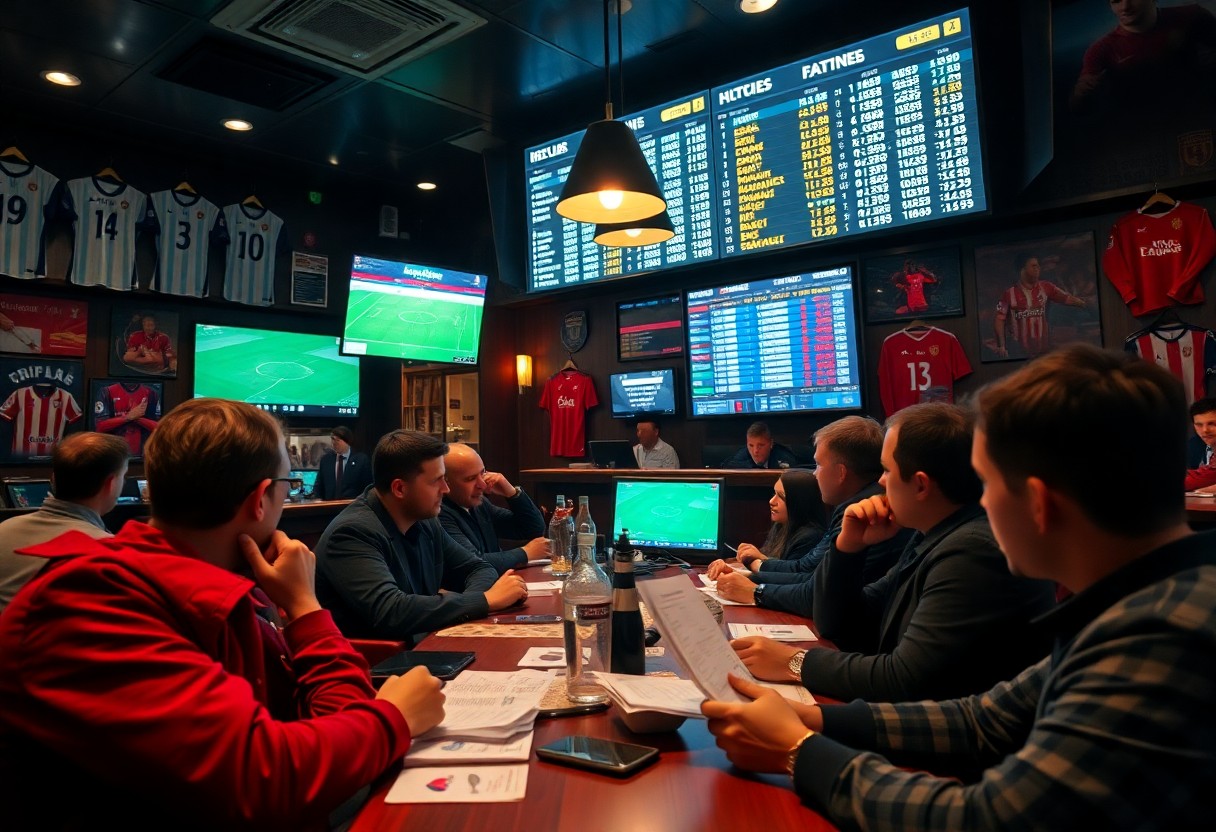

Most bettors overlook how recent form and scheduling interplay to shape outcomes; analyzing team momentum, fixture congestion and rotation risk exposes dangerous pitfalls, while tracking home/away splits, injuries and statistical trends reveals value opportunities for smarter wagers. This guide offers a structured approach to weigh match context, probabilities and market mispricing with clear, data-driven methods you can apply each matchweek.
Overview of La Liga
Spain’s top flight runs from August to May with 20 clubs playing a double round-robin (38 matches each), making fixture sequencing and form swings central to prediction models. European commitments and midweek cups frequently create fixture congestion, while mid-season breaks and winter postponements shift momentum. For bettors, tracking rest days, travel and rotation patterns across this 38-game structure yields clearer edges than relying on headline odds alone.
History and Structure
Founded in 1929, La Liga evolved into a 20-team league with promotion/relegation involving three clubs; the season’s double round-robin gives every team 38 matches. Tie-breakers prioritize head-to-head records before goal difference, and promotion from Segunda combines two automatic spots with a playoff for the third. Understanding the calendar, fixture clustering and head-to-head rule refines form-based betting models.
Key Teams and Players
Real Madrid, Barcelona and Atlético Madrid dominate betting markets; Real’s pace-led attack and Barcelona’s possession control shape odds, while Atlético’s defensive approach often produces low-scoring lines. Players like Jude Bellingham, Vinícius Júnior, Robert Lewandowski and Jan Oblak drive match outcomes and market movement, so availability and short-term form must feed any live or pre-match strategy.
Tactically, Real’s rotation for Champions League nights and Barcelona’s high press create recurring patterns – squad depth often predicts outcomes in congested weeks. Atlético’s compact setups generate value on under 2.5 goals markets; monitoring suspensions, minutes played and European schedules can expose mismatches between bookmaker lines and likely performance.
Analyzing Team Form
Assessing form means tracking the last five to ten matches using metrics such as points, goal difference and expected goals (xG). For example, a team that picked up 13 points from five matches (W4 D1) with a +6 goal difference and three clean sheets signals both attacking and defensive balance. Pay attention to points-per-game (PPG) swings and recent head-to-heads when weighing betting value.
Home and Away Performance
Home records often tell a different story than away: some clubs take 70% of their points at home, averaging 2.1 goals per home match versus 0.9 away. Travel, pitch dimensions and crowd influence matter; teams playing three away fixtures within ten days commonly drop PPG by ~0.4. Use split stats (last 10 home/away games) and set-piece concession rates to identify reliable home edges or away vulnerabilities.
Recent Trends and Statistics
Focus on last-five and last-ten match windows for signals: an xG difference ≥ +1.0 across five games implies sustained chance creation, while a conversion rate under 5% flags finishing problems. Also monitor shots on target, xGA, and defensive errors-sides allowing 12+ shots per game are vulnerable to upsets. Track suspensions and injury trends that rapidly shift these metrics.
For deeper context, compare a team’s 10-match xG (e.g., 14.2) to actual goals (e.g., 10) to spot finishing inefficiency and check how many goals conceded came from set pieces (say 5 of 10). Factor in schedule density-UEFA midweeks typically induce a 20-30% rotation-and adjust expected lineups accordingly; combining these numbers reveals over- or under-valued betting markets.
Fixture Analysis
Scan sequences of opponents, travel and rest to spot exploitable patterns: a run of three away games in ten days usually reduces pressing intensity, while back-to-back matches against top-six sides inflate upset potential. Use examples: teams juggling Champions League midweeks often drop points domestically, and short turnarounds (<72 hours) force rotation. Prioritise head-to-head trends, venue variance and squad rotation history to convert schedule noise into predictive edges.
Importance of Fixture Congestion
When clubs play 2-3 matches per week, rotation becomes non-negotiable and form can fluctuate rapidly. Smaller squads commonly show a drop in defensive solidity after successive fixtures, whereas deep-rostered teams maintain output. Monitor minutes played, recent injuries and travel distance; teams with heavy midweek travel or European commitments are likelier to field weakened XIs and underperform domestic expectations.
Impact of Local Rivalries
Derbies like El Clásico, Sevilla vs Real Betis or Basque clashes inject intensity that overrides recent form; managers often select strongest XIs despite congestion and players lift performance. Expect higher fouls, set-piece opportunities and fluctuating odds as emotion skews objective metrics. For betting, treat these fixtures as higher-variance events where historical form can be less predictive.
On the market level, rivals produce larger odds swings pre-match and greater variance in live markets due to momentum shifts and disciplinary incidents. Analyze recent head-to-heads, typical tactical setups (high-press vs low-block) and individual player heatmaps; when a derby features an in-form striker against a weakened backline, targeted bets like both teams to score or player goal markets often offer value.
Betting Markets and Odds
Understanding Betting Types
Markets span from simple match result bets to Asian handicap, over/under, both teams to score and multi-leg accumulators; a La Liga favourite at 1.50 implies 66.7% probability while a 6.00 underdog brings larger variance. Use form vs fixture context to choose markets where you can detect value and limit upset risk. This helps prioritise markets that match bankroll size and edge.
- Match result
- Asian handicap
- Over/Under
- Both teams to score
- Accumulator
| Match result | Best for short-term bets when form and fixtures give a clear favourite (e.g., Real Madrid vs Cádiz). |
| Asian handicap | Use to neutralise quality gaps; -1.0 on a strong side reduces variance vs straight moneyline. |
| Over/Under | Target games with contrasting styles (Atlético low-scoring vs Barça high-scoring) to exploit totals. |
| Both teams to score | Useful when both sides show offensive metrics but weak defensive form; watch travel and rotation. |
| Accumulator | High payout, high variance; limit legs to 3-4 and avoid correlated selections to manage risk. |
Reading and Interpreting Odds
Decimal odds convert to implied probability via 1/odds: 1.80 → 55.56%; markets that sum to over 100% show the bookmaker overround, which inflates the house edge. Compare your calculated probabilities against the market to find value, and avoid bets where your edge is under 3-5% after accounting for the margin.
In practice: Real Madrid 1.60 (62.50%), Draw 3.80 (26.32%) and Granada 5.50 (18.18%) sum to 107.0% – the overround is 7.0%. To estimate fair probabilities divide each implied probability by 1.07 (e.g., Real Madrid fair ≈ 58.4%, fair odds ≈ 1.71); target situations where your independent model gives a higher fair probability than the adjusted market, and prefer markets where line movement or team news increases your estimated edge.
Strategies for Smarter Betting
Blend qualitative scouting with quantitative filters: monitor last 10 matches (e.g., 6-2-2), rest days, and lineup risk to spot value bets. Apply strict bankroll rules-1-3% flat stakes or fractional Kelly-to manage variance. Use market timing around team news and target matches where public sentiment inflates odds after headlines; betting on overlooked away teams during fixture congestion has historically yielded positive edges in midseason La Liga runs. Prioritize bets with clear, measurable edges.
In-Depth Research Techniques
Dig into head-to-head splits, home/away xG per 90 and goal timing-late-game concessions often shift live markets. Combine video scouting for set-piece or pressing weaknesses with data sources like FBref/Opta for pressing intensity and final-third pass completion. Quantify rotation risk when clubs face three matches in ten days and cross-check medical reports; flag matches where injuries/rotation materially alter expected XI before committing stake size.
Utilizing Statistical Models
Use Poisson, Elo and xG-based regressions to translate team strength into probabilities, calibrating to recent form and home factor. For example, a Poisson mean λ=2.7 gives P(over 2.5) ≈ 50.7%, a useful benchmark against bookmaker odds. Track calibration metrics like Brier score and guard against overfitting by using cross-validation and limiting feature proliferation.
Combine models into an ensemble-Poisson for scorelines, logistic regressions for outcomes and Monte Carlo (10,000 sims) to capture variance-while adjusting inputs for travel, rest and injuries. Backtest across at least two La Liga seasons (≈760 matches) and evaluate ROI, Sharpe and Brier to validate edges. Apply a home advantage tweak (~0.25-0.35 goals) and regress short-term form toward league averages; flag model-market gaps >5 percentage points for manual review before betting.
Common Betting Mistakes
Frequent errors sabotage otherwise solid analysis: chasing losses after two bad bets, overreacting to a single upset, and failing to cross-check expected lineups against official sheets. Narrow samples-backing form from three matches-inflate variance; instead apply the last 10 matches filter, verify rest days and rotation risk, and price bets only after confirming starting XI information.
Overlooking External Factors
Midweek travel, weather and referee tendencies shift probabilities more than headline form; for instance, three away games in ten days plus a long flight commonly reduces pressing and increases upset chances, and managers often rotate before UCL ties. Any model worth using must fold in these variables before staking.
- Travel
- Fixture congestion
- Weather/pitch
- Referee style
- Cup commitments
Misjudging Team Motivations
Motivation swings produce real value: a side within three points of safety with four matches left typically adopts higher-risk attacking patterns, while a midtable club with nothing to play for may rotate heavily. Factor league position, remaining fixtures and upcoming cup ties when projecting intensity and expected goals profiles.
Dig deeper by quantifying motivation: check points gap, games remaining, recent managerial comments, and whether key players are on expiring contracts or returning from suspension. If points gap ≤3 with ≤6 fixtures, expect elevated pressing and set-piece focus; contrast that with markets slow to adjust and target discrepancies in odds where motivation is underpriced.
Final Words
Ultimately, mastering La Liga form and fixture analysis empowers bettors to make disciplined, value-driven wagers by weighing recent team performance, fixture difficulty, squad rotation, injuries, travel, and head-to-head trends. Combine objective data with sound bankroll management and selective market targeting to convert insight into consistent, evidence-based betting decisions.
FAQ
Q: How should I interpret “form” in La Liga when making betting decisions?
A: Form should be evaluated beyond raw results: consider recent results (last 5-10 matches), expected goals (xG) and xG conceded to gauge underlying performance, home/away splits, strength of recent opponents, margin and context of wins or losses, and any tactical or personnel changes. Short-term streaks can signal momentum but small samples are noisy; weigh consistent metrics (xG, shots on target, possession in final third) higher than isolated outcomes.
Q: What fixture factors most affect match outcomes and betting value in La Liga?
A: Key fixture factors include days of rest and travel, fixture congestion (European cup ties, domestic cups), sequence difficulty (three tough matches in a row vs. easier run), derby or rivalry intensity, home pitch and climate, and anticipated rotation for squad depth. Use the fixture calendar to spot mismatches where a rested underdog faces a fatigued favorite or where rotation likely reduces a team’s usual strength – those situations often create market inefficiencies.
Q: How do I combine form and fixtures into a practical betting strategy for La Liga?
A: Build a simple process: quantify form with metrics (xG, shots, defensive errors), layer fixture context (rest, travel, rotations), check team news and head-to-head styles, then identify markets where your model differs from bookmaker odds (value bets). Manage stake size with a unit system tied to confidence, shop for the best odds, keep records to refine your model, and favor markets less prone to variance (over/under, expected goals-based props, or both teams to score) when samples are small.