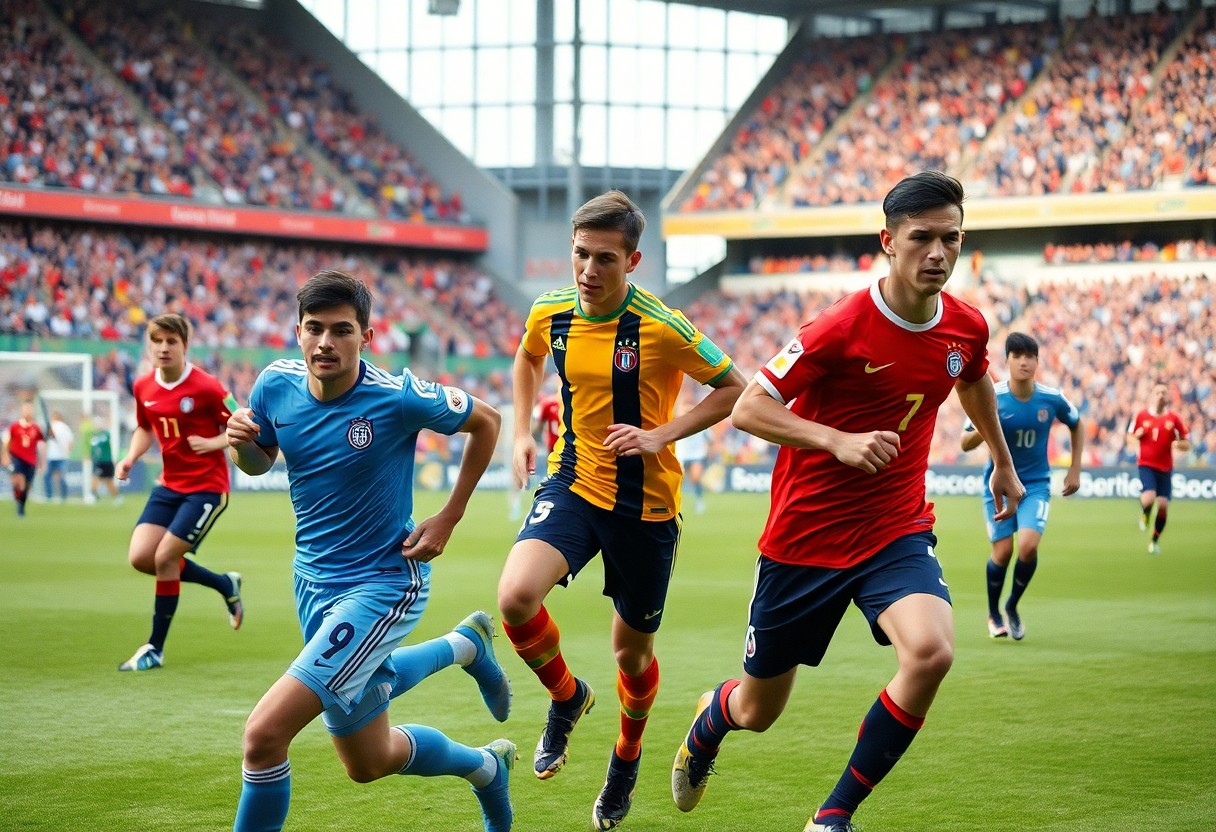

Just master timing, discipline and data analysis to exploit live betting markets, tracking momentum shifts, odds drift and liquidity; set clear stake rules and limits to control the fast-moving risk of losses, use hedging and value hunting for higher profit potential, follow major matches like Champions League.
Understanding Live Betting Markets
Live betting markets move in seconds based on possession, shots, substitutions and refereeing decisions. Traders exploit real-time value, but face high volatility and rapid loss risk if execution lags.
What are Live Betting Markets?
Markets that accept wagers after kickoff encompass hundreds of micro-markets—next-goal, corners, bookings and live handicaps—and price constantly from event data, streaming feeds and punter flow; see mechanics at football betting markets explaned. Operators manage exposure via limits and automated adjustment; latency and feed accuracy directly determine trader edge.
Differences Between Pre-Match and Live Betting
Pre-match pricing comes from models, team form and market consensus, while live betting markets reprice on momentum swings, substitutions and refereeing events; that shifts implied probabilities in seconds. Successful live traders prioritize speed and execution, reduce stakes after chaotic sequences, and hunt for opportunity density rather than single high-odds punts.
Red cards illustrate divergence: a 10% pre-match favorite can see implied win probability drop by 20–40% after a 30th-minute dismissal, creating arbitrage and hedge chances; scalping small edges across dozens of markets and using position limits keeps exposure controlled while exploiting live betting markets’ volatility.
Strategies for Successful Live Betting
Exploit momentum swings, match state and liquidity by targeting high-profile fixtures and using disciplined staking: limit bets to 1–3% of bankroll and size stakes by perceived edge. Prioritize matches with heavy live liquidity such as Champions League games where spreads tighten and execution is faster; combine real-time stats with pre-match models to capture edges of 2–8% in live betting markets.
Analyzing In-Game Statistics
Track expected goals (xG), shots on target, pass completion in the final third and corner ratios—these often predict outcomes before odds adjust. If xG after 60′ reads 2.1 vs 0.4 yet the underdog’s win price only moved 10%, that signals value.
Taking Advantage of Shifts in Odds
React to event-driven volatility—goals, red cards or tactical subs often produce odds swings of 10–30%. If a red card drops a favorite from 1.85 to 2.60, predefine entry/exit points and act within seconds: market mispricings often last 10–60 seconds on major feeds. Use price alerts and fast betting rails to capture value before sharp books reprice in live betting markets.
Exploit latency differences across sportsbooks by monitoring at least three bookmakers and an exchange; smaller books can lag 3–15 seconds, creating fleeting arb or value opportunities. Set automated triggers for thresholds (e.g., favorite drift >20% after a goal) and hedge with quick lay bets on exchanges when exposure exceeds target. Prioritize speed, low commission routes, and clear stop-loss rules to protect bankroll while navigating live betting markets.
Factors Influencing Live Betting Outcomes
In-play swings in live betting markets hinge on micro-events: red cards, tactical substitutions, xG shifts and momentum runs within 10–20 minutes after kickoff; bookies adjust implied probabilities quickly, sometimes moving lines by 10–30% after a single incident. Market depth and streaming delays create arbitrage windows for traders who track real-time stats and bench lists. The
- live betting markets react to substitutions and red cards
- odds can shift 10–30% after key events
- The market often overreacts to single incidents
Team Form and Performance
Recent form metrics — last five matches, home/away splits, and expected goals (xG) — predict in-play behavior: teams on a 6-match unbeaten run concede fewer expected goals and often see their in-play favorites shorten by 5–15%. Squad rotation, fatigue from midweek fixtures, and injury lists create reliable edges in live betting markets.
Weather Conditions and Other External Factors
Wind, pitch quality and altitude change ball trajectories and player stamina: high-altitude venues (e.g., La Paz) accelerate early intensity while heavy rain increases stoppages and favors low-scoring outcomes; match delays and travel during congested schedules shift in-play win probabilities by measurable margins. Use surface and local climate data to adjust models for live betting markets.
- live betting markets widen when pitch conditions worsen
- altitude boosts early-game stamina effects
- Recognizing how weather alters momentum helps bettors
Deeper factors include referee tendencies (foul and card rates), crowd size influencing home advantage, and logistical issues like overnight travel; combine these with market liquidity and latency to quantify impact — for example, matches with referees averaging 4+ cards per game see faster odds moves after aggressive tackles.
- live betting markets reflect referee and crowd effects
- scheduling (midweek vs weekend) shifts fatigue models
- Recognizing these layers turns short-term noise into opportunities
Popular Live Betting Markets
Fast-moving options define live betting markets: match result, draw no bet, over/under goals, Asian handicap, next-goal and corners. Markets react to substitutions, red cards and momentum swings, producing short windows of value and higher volatility than pre-match lines; disciplined sizing and quick hedges convert those swings into profit opportunities, especially in high-liability fixtures.
Match Result and Draw No Bet
Match result bets are simple but volatile in-play; odds swing massively after goals or injuries. Draw No Bet removes the draw and refunds stakes on stalemates, lowering variance in live betting markets — ideal for favorites dropping to long odds after early setbacks.
Over/Under Goals and Asian Handicap
Over/Under lines often sit at 2.5 or 1.5 and shift with match flow; Asian handicap offers quarter and half lines (e.g., -0.25, +0.5, -0.75) that split stakes to cut losses or wins. Asian lines reduce draw noise, letting you exploit teams that push late or sit deep — live adjustments reward fast traders who track xG and possession dynamics in live betting markets.
Deeper strategy: monitor shot volume and expected goals after half-time — a 0–0 half with 8 shots on target usually inflates live over 1.5 value post-60′. Asian -0.25 lets you win half and push half if favorite concedes; Asian -0.75 turns a one-goal lead into a half-loss, two-goal lead into full-win. Use small, timed stakes to manage rapid market swings and maximize ROI in live betting markets.
Utilizing Technology for Live Betting
Data feeds and low-latency connections let traders exploit short-lived edges in live betting markets; professional feeds push sub-second updates while consumer streams can lag 2–5 seconds, costing value. Use APIs, pre-built dashboards, and automated rules to detect odd shifts of 4–6% and react within 500–1,000ms. Combining historical in-play models with real-time indicators raises win-rate and reduces exposure.
Live Streaming and Real-Time Data
Official streams such as Champions League coverage give context for stoppages, substitutions, and pitch conditions that move live betting markets quickly; verify stream delay first since a 5–10 second lag can erase edges. Integrate xG, shot maps and possession overlays to time entries around set-pieces or red cards. Stream delay is the most dangerous variable when trading in-play.
Betting Apps and Tools
Choose apps with rapid odds refresh, one-click settlement and API access to capture micro-edges in live betting markets; many refresh every 0.5–2s and offer cash-out and auto-bet features. Auto-bet features boost execution speed but increase risk of runaway losses.
Set up alert filters for implied probability gaps >5%, enable automated stop-loss (e.g., max 3 consecutive losses or 2% bankroll), and log timestamped odds for audit. Pro users typically risk 1–3% per live wager and rely on rules-based automation plus manual overlays to scale without emotional bias.
Managing Your Bankroll in Live Betting
Define a unit size and enforce it: most professional traders allocate 1–3% per live bet of bankroll — on a $1,000 bankroll that’s $10–$30 — with a maximum match exposure of 5% to avoid correlated losses. Set a stop-loss at 20% drawdown and pause activity.
Setting Betting Limits
Set daily and per-session caps: limit to 10 live bets per session and a daily loss cap of 5% of bankroll to curb tilt. Use fixed-percentage staking (1–3%) and a max single-event exposure (5%). Clear limits keep decisions aligned with long-term goals in live betting markets.
Evaluating Risk and Reward
Quantify edge before committing: a bet is worth taking when expected value is positive after vig and execution risk — target situations where your assessed win probability exceeds implied odds by at least 2%. React to in-play events (red cards, penalties) that shift probability; smaller stakes on high-variance lines preserve bankroll. Track win-rate and ROI for each market within live betting markets to spot leaks.
Calculate EV with concrete numbers: for decimal odds 2.5 and a true win probability of 50% EV = 0.5×2.5 − 1 = +0.25 (25%), so a $100 stake yields expected $25 profit. Convert EV to stake via Kelly: full Kelly = edge/odds-1, then apply fractional Kelly (commonly 10–25% of Kelly) to reduce volatility. Use this math fast in live betting markets to size disciplined, evidence-based wagers.
Summing up
Considering all points, mastering live betting markets requires disciplined bankroll management, quick market reading, and targeted value hunting during play; study event dynamics.